How to win one of the most brutal bike races on Earth, according to the people who did it
The Silk Road Mountain Race is long, beautiful, brutal and lonely. Normally the fittest riders win bike races, but Silk Road takes something more. Just ask Justinas Leveika and Nathalie Schneitter.
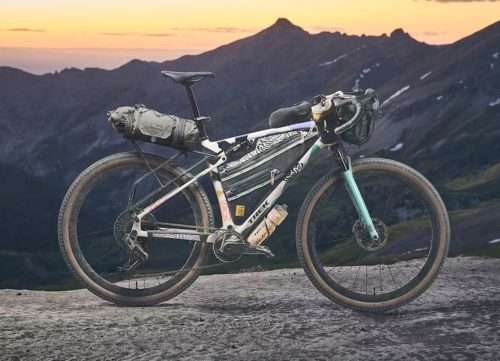
Silk Road covers 2,052 kilometers and 38,406 meters of climbing through Kyrgyzstan’s Tian Shan Mountains, with temperatures ranging from -15 to 40 degrees celsius (5 to 100-plus degrees Fahrenheit), ridden self-supported through mountains and wilderness. Only rarely do riders come across villages with proper showers and beds. They ration food and sleep like shipwrecked sailors. They overcome (in Schneitter’s case) having their food stolen by stray dogs, or (in Leveika’s case) falling in a river in the middle of a cold, all-encompassing dark night.
Leveika was the first person across the line at Silk Road with a time of 7 days, 16 hours and 56 minutes. Schneitter was the first woman, and 10th overall, with a time of 9 days, 15 hours and 51 minutes. Neither felt like they had any business winning, which is probably why they won: so strong was their defiance of limits and sense, that they messed around in Kyrgyzstan and left with two of the most impressive accomplishments in cycling.

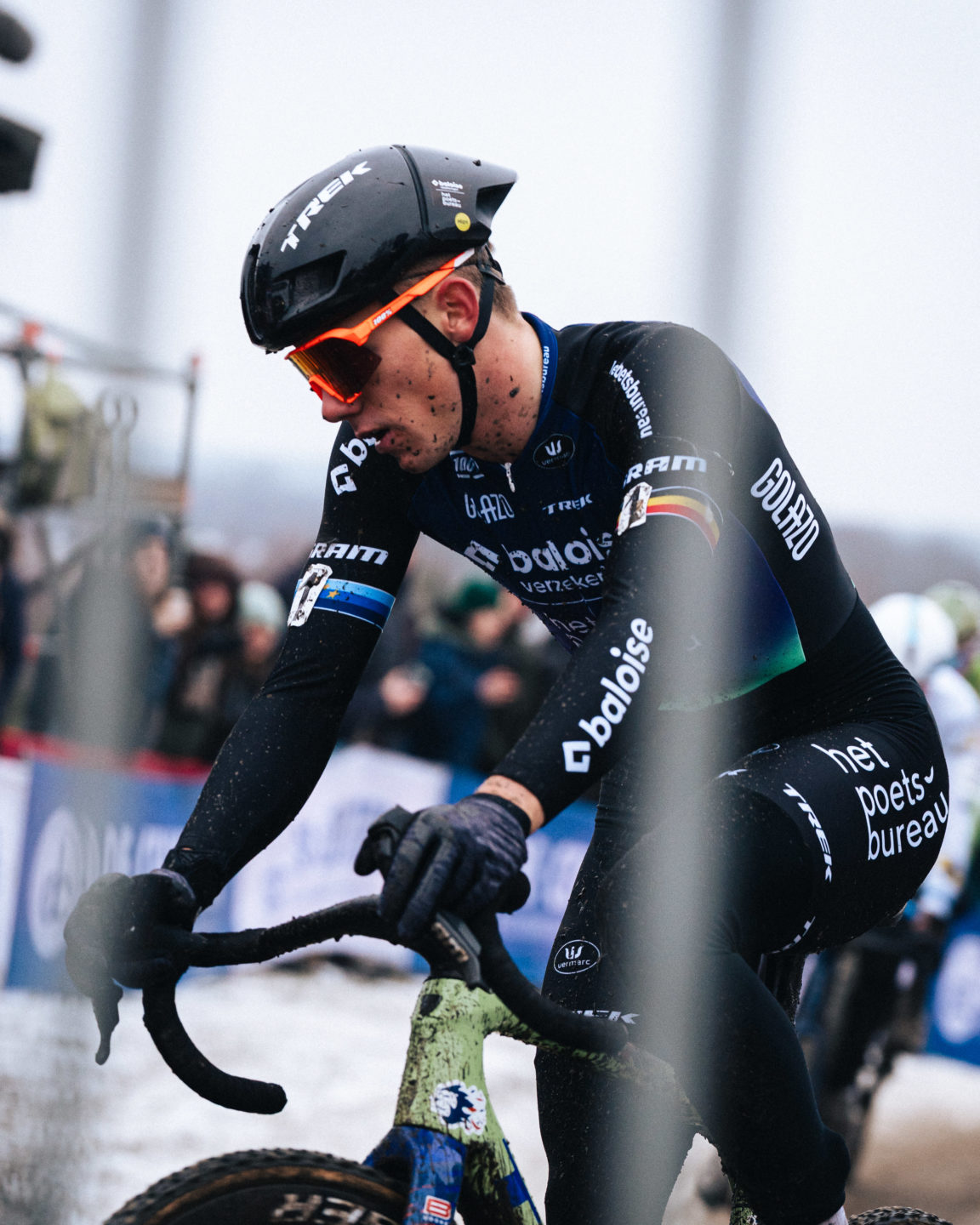
Justinas Leveika in the great expanse. | Photo: Nils Laengner
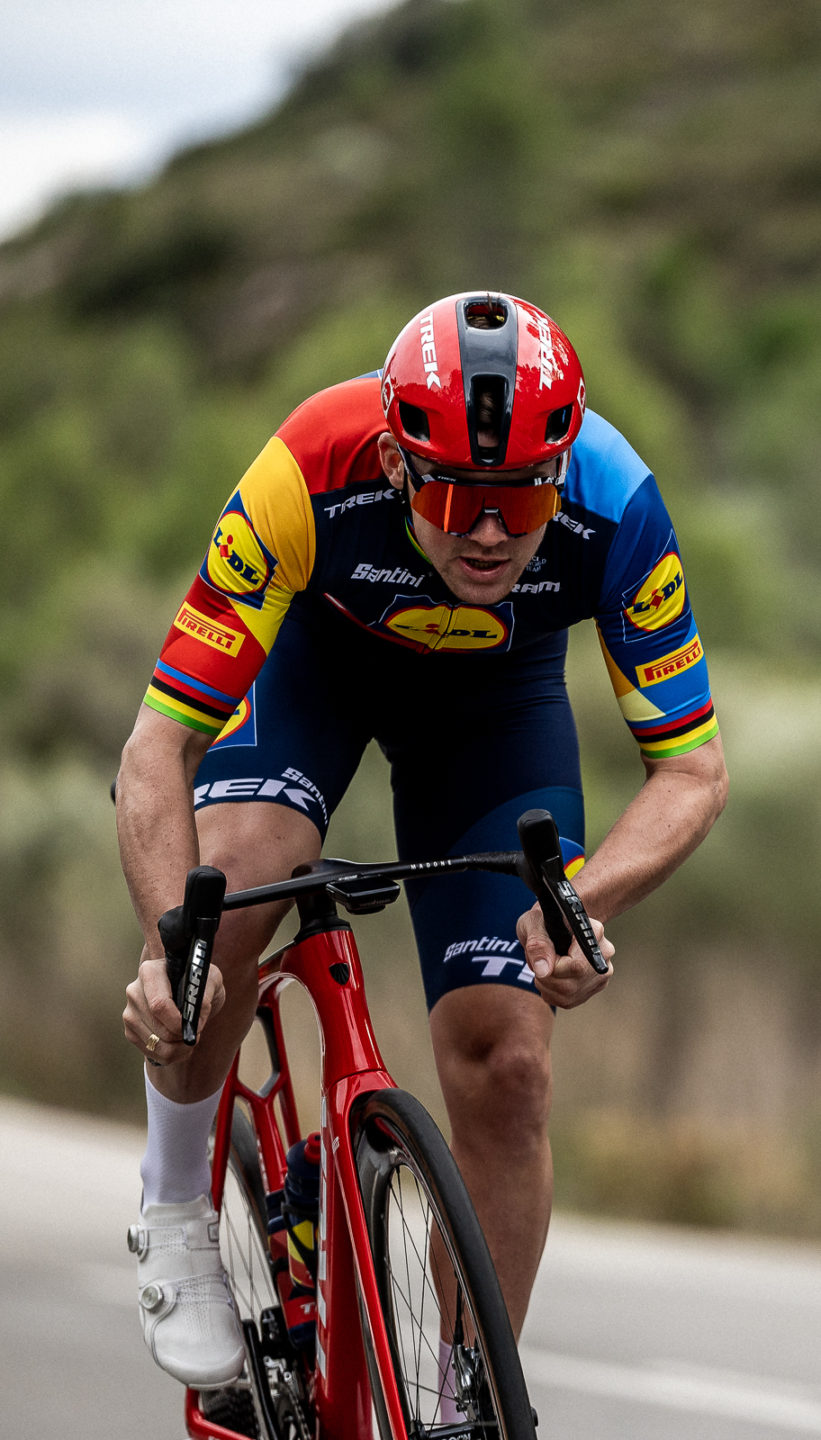
Leveika doesn’t need any introduction in the world of ultra endurance racing. He is one of the most accomplished riders ever, with wins at many of the biggest races in the sport, including the famed bikepacking Triple Crown of the Tour Divide, the Arizona Trail, and the Colorado Trail. (We wrote about his record Tour Divide effort in 2024.) But by every measure he entered Silk Road foolishly undercooked. On paper he was a favorite to win, but he had no expectations of doing so, and early evidence suggested his assessment was correct: At the first checkpoint, nearly two days into the race, he was fourth on the trail and more than four hours behind the race leader.
“I feel a bit like a student who has passed an exam without learning much,” Leveika said. “People traveled to Kyrgyzstan weeks ahead, or slept at home in altitude tents. They were breathing through various machines, doing stuff to acclimatize or feel better in the altitude. And I arrived four days before the start.”
I feel a bit like a student who has passed an exam without learning much.
- Justinas Leveika
Schneitter was prepared. She had wanted to race Silk Road since 2018 when she saw photos of the inaugural edition. She raced the 1,400-kilometer Hungarian Divide in June and was the fastest woman there, as well as the second overall finisher. Still, she was often overlooked within lists of favorites to win. Until this year, she had primarily established herself in XC and e-bike racing. A two-time e-bike World Champion, yes, but in 60-90 minute efforts, no yurts involved. She was chasing pre-race favorite Kerry McPhee almost to the very end. No one assumed she’d win.
So two athletes with very different profiles and backgrounds. But their races pivoted in their favor in similar ways: With a spark of gumption and an excessive amount of grit.
Leveika flipped the race between the first and second checkpoints. He rode himself into form by the third day, and was well ahead of estimates going into CP2, where he was the first rider to arrive just under two hours ahead of second-place Jens Van Roost. They slept in the same room that night in a small shack along the route, and the gamesmanship of the race persisted even as they tried to rest.

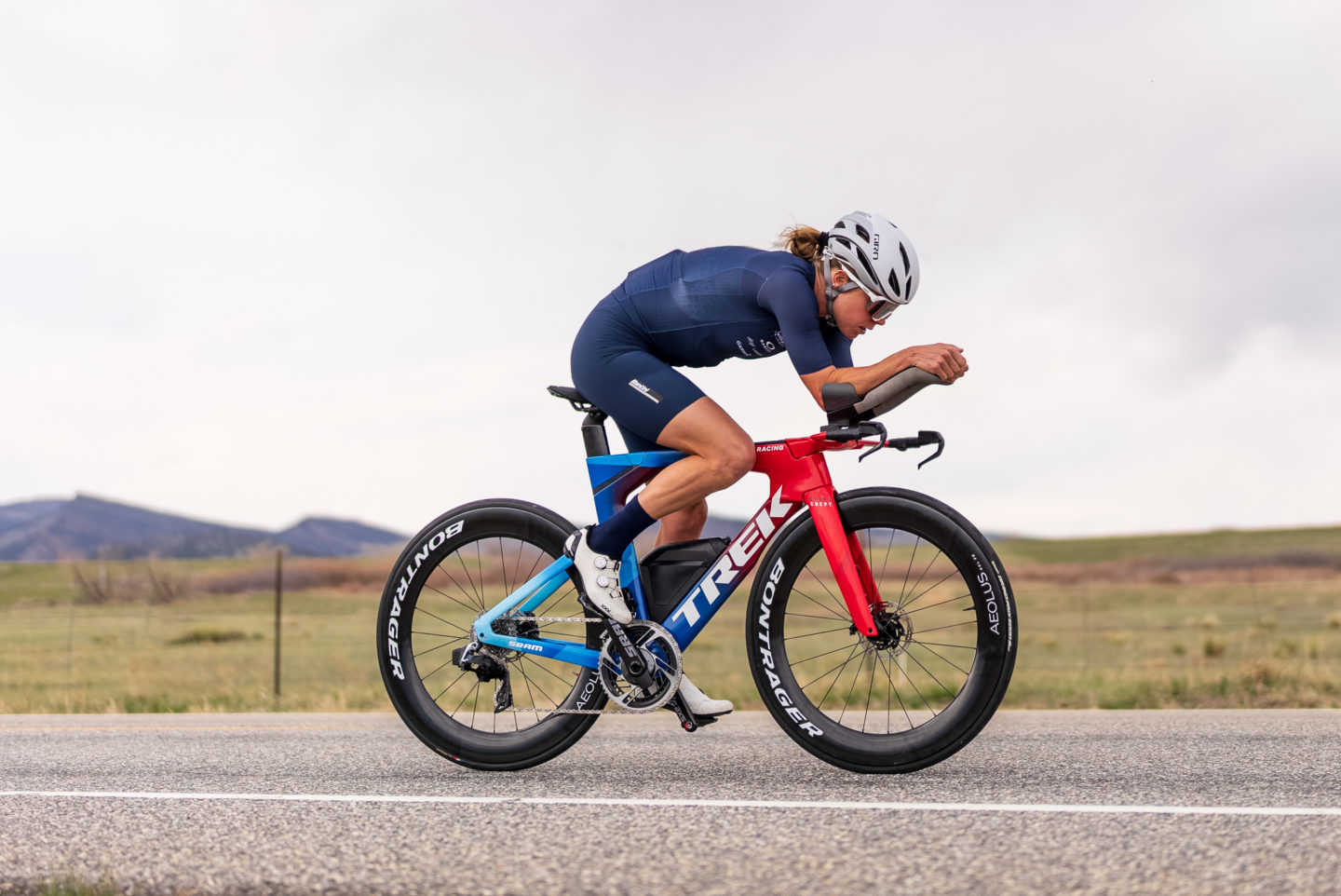
Nathalie Schneitter calls herself a "cycling chameleon." She'll take on any sport on two wheels. | Photo: Stephen Shelesky
“He was trying not to cough, to not show that he’s getting a bit sick,” Leveika said, recalling a conversation with Van Roost after the race. “You can’t hide this from each other if you are in the same room, and then he was like, ‘I heard you coughing, and I was like, OK, I can too.'”
Van Roost shouldn’t have worried. Leveika woke up on four hours of sleep and put in an enormous effort to create an insurmountable gap. He rode practically non-stop from the second to third checkpoints, covering nearly 400 kilometers in roughly 23 hours. Van Roost was still his closest competitor at CP3 … at more than 13 hours behind.
At that point, Leveika’s running mantra had become “don’t fuck it up.” His ride could have detonated in a number of ways. He had a side puncture at one point. And he lost a bottle of lube, so he started treating his chain with sunflower oil.
For me, 100% it's not the last time I do something like this. But I think I need a little bit of a break now.
- Nathalie Schneitter
The scariest moment happened late one night at 3,500 meters of elevation. He lost a bolt from one of his cleats and couldn’t unclip as he was crossing a river. He splashed down, and was lucky that the bag holding his puffy jacket and a merino base layer stayed dry. He kept climbing just to warm up more quickly.
Schneitter didn’t make her winning move until just 400 kilometers remained. And that “move,” in fact, was the judicious decision to stop.
Race organizers had warned riders about a 13-kilometer hike-a-bike section around the 1,600-kilometer mark that had 1,400 meters of climbing. They didn’t know that the seven-kilometer descent from the top would also be unrideable. Schneitter hit the summit around 2 a.m., and started scuttling down in pitch darkness. All she could see was the arrow on her GPS telling her where to aim her steps. After an hour, she realized she had only descended 150 meters.

Justinas Leveika on a welcome stretch of pavement. | Photo: Nils Laengner
“I was like, ‘Oh my God, this is gonna take forever.'” Schneitter said. “So I decided to set up camp, put up my tent at 3,750 meters — like really high up in a snowstorm — and just slept for three hours until I had daylight again. And that for sure, was the race-winning decision.”
As Schneitter slept, MacPhee was struggling mightily to complete her hike just a few hours ahead. When Schneitter woke up, her path forward had dried out somewhat, allowing her to make relatively swift progress and pass MacPhee, who was recovering from her own brutal night in the next town.
For the last two days, it was Schneitter’s turn to fend off a challenger. To that point, Schneitter consistently gave herself 4-5 hours of sleep per night. On the very last night, however, she set her alarm to ring at 45-minute intervals so she could keep surveillance on MacPhee’s progress. After the second sleep interval, MacPhee was just 11 kilometers away on a downhill segment. Schneitter estimated that she had just a 25-minute gap. She decided then that it was time to finish the race.
My little pickles ... It is my not-so-secret that I like to pull one out when I'm at my low.
- Leveika
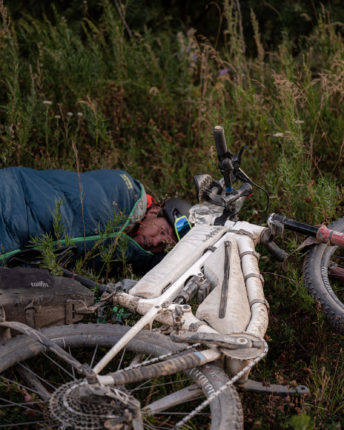
On 90 minutes of interrupted sleep, Schneitter rode 255 kilometers and almost 6,000 meters of climbing in roughly 24 hours. She admits that her decision making wasn’t sound during that period. On the final climb, snow began to fall, so she laid down to rest. She was so tired, she didn’t put on her puffy jacket. Thankfully, she woke up to her four-minute alarm — “the four-minute nap helped a lot” — but had she slept through it, she would have been in real danger of hypothermia.
Relief was the overriding emotion for both Leveika and Schneitter at the end. They won, but more importantly, they survived. Even more importantly, they were done; they’d returned to a world of proper showers, proper beds, and proper beer.
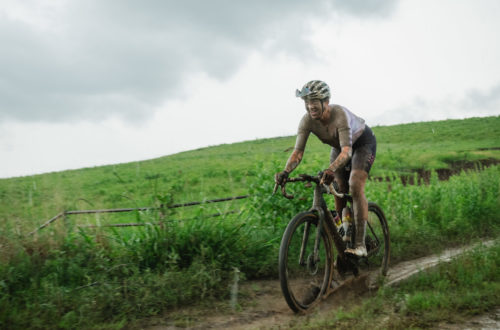
That sort of satisfaction is welcome, but admittedly a little off-putting if you aren’t used to it. Schneitter calls herself a “cycling chameleon.” She’s in her 10th year racing with Trek, and in that time she has let curiosity guide her career. In her first year, she took second at Megavalanche, the mass-start downhill marathon mountain bike event down Alpe d’Huez (which you should look up on YouTube), and entered enduro and e-bike racing while they were burgeoning disciplines. But whatever she raced, she could count on celebrating big results the old fashioned way: hands in the air, screaming, adrenaline coursing through the blood. At the end of Silk Road, she just felt emptiness.
The majesty of the Tian Shan mountains. | Photo: Stephen Shelesky
“When you race XC, it’s short and intense, and you cross the finish line and win, and it’s like, ‘Yes!’ It’s all the emotions packed in a very short time frame,” Schneitter said. “And over 2,000 kilometers, that’s such a long time. I think it’s the same emotions, but just more spread. And at the end, it was off.
“For me, 100% it’s not the last time I do something like this. But I think I need a little bit of a break now.”
After a few days, a sense of accomplishment gradually dawned on her. She was proud to not only finish first among the women, but to come in 10th overall, just a little more than two-and-a-half hours behind seventh place. Only 83 riders finished Silk Road from a start list of more than 230. Schneitter could count herself among the elite among the survivors among a select group of people even capable and foolhardy enough to attempt a race like this.
You realize that, OK, I'm lucky I have a body that's able to cope with this and equipment that held up and brought me here and survived everything.
- Leveika

Leveika knew the score. He’s finished dozens of races like this, and is well-acquainted with the dark places the mind can go, even at the finish, so depleted is every reserve of mental and physical nourishment. His trick to combatting the darkness is small joys. In the daylight it’s easier. He focuses on the minute details of the landscape — the leaves, the peaks, the sky. When the sun goes down and he can no longer see the world around him, he reaches for his pickles.
“My little pickles,” Leveika said. “I would drink the juice from the jar, and then throw a couple pickles in a bag and have it with me. It is my not-so-secret that I like to pull one out when I’m at my low.”
Leveika found racing with the lead difficult on his mind. Of course, he knows he was in an enviable position; every one of his competitors would have traded places. But it forced him to ride in a way that he doesn’t much enjoy — more controlled and managed, less reactive and spontaneous. He likes taking on ultra endurance races a little underbaked, with the competition nipping his heels, and feeling as if he’s overcoming something beyond the race itself.
He’s most comfortable when he’s being pushed beyond his known boundaries. And there, too, he acknowledges what a privilege it is to be so capable. The feeling as he approached the finish line was part relief, and part gratitude for another opportunity to survive the elements.
“You reach the pavement, and there’s still 17 kilometers or something to the finish. That’s where you think through what you just did, achieved,” Leveika said. “Then you realize that, OK, I’m lucky I have a body that’s able to cope with this and equipment that held up and brought me here and survived everything.”
The prize for winning Silk Road is a traditional Kyrgyz hat called an Ak-kalpak. For Leveika and Schneitter, the company was more valuable. After a week-plus of riding almost entirely alone, they were both greeted in the middle of the night by a smattering of race officials, media, fans and fellow riders. Schneitter estimated that 50 people were at the line to greet her when she rolled in around 1 a.m., including Leveika, who hugged her. The sight of so many people was overwhelming after nearly 10 days of solitude.
An adventure like no other. | Photo: Stephen Shelesky
The two sat and shared their stories with each other. They talked about their key race decisions, the places they slept, the beauty they saw, the shops they missed. Just talking with another Silk Road competitor was its own reward, part therapy and part affirmation that yes, their experiences were sublime and harrowing and real.
They won because they were fastest, but they never would have even completed the race without a driving sense of curiosity. At first blush, ultra endurance cycling is a sport about discipline, and the careful rationing of energy and time and resources. And that’s true to some extent. But Leveika and Schneitter illustrated how much farther you can go when you also hold the world and yourself in awe. Precision is a broken engine without wonder.
“And then,” Leveika said, “you hit the bed and you don’t set an alarm.”