
How pro mountain bikers use the long summer break to (hopefully) crush the end of the season
When the Trek-Unbroken XC and DH squads lined up on Friday, Aug. 21 in Les Gets, 40 days had passed between World Cup races. Last year, that midseason break was an even longer 46 days. Breaks and bye weeks aren’t unusual in sports, but rarely will a whole sport hibernate in the midst of competition like professional mountain biking.
That length of time is not long enough for athletes to treat it like an offseason. They can’t stop returning their coaches’ calls just yet, and for the most part they stay home rather than take summer vacations. But they do see that window of time as a chance to reset after a gauntlet stretch of racing.
I use this break to get in the training I definitely need, but also to come into the next World Cup as refreshed and ready to go as possible.
- Ollie Davis, Trek-Unbroken DH
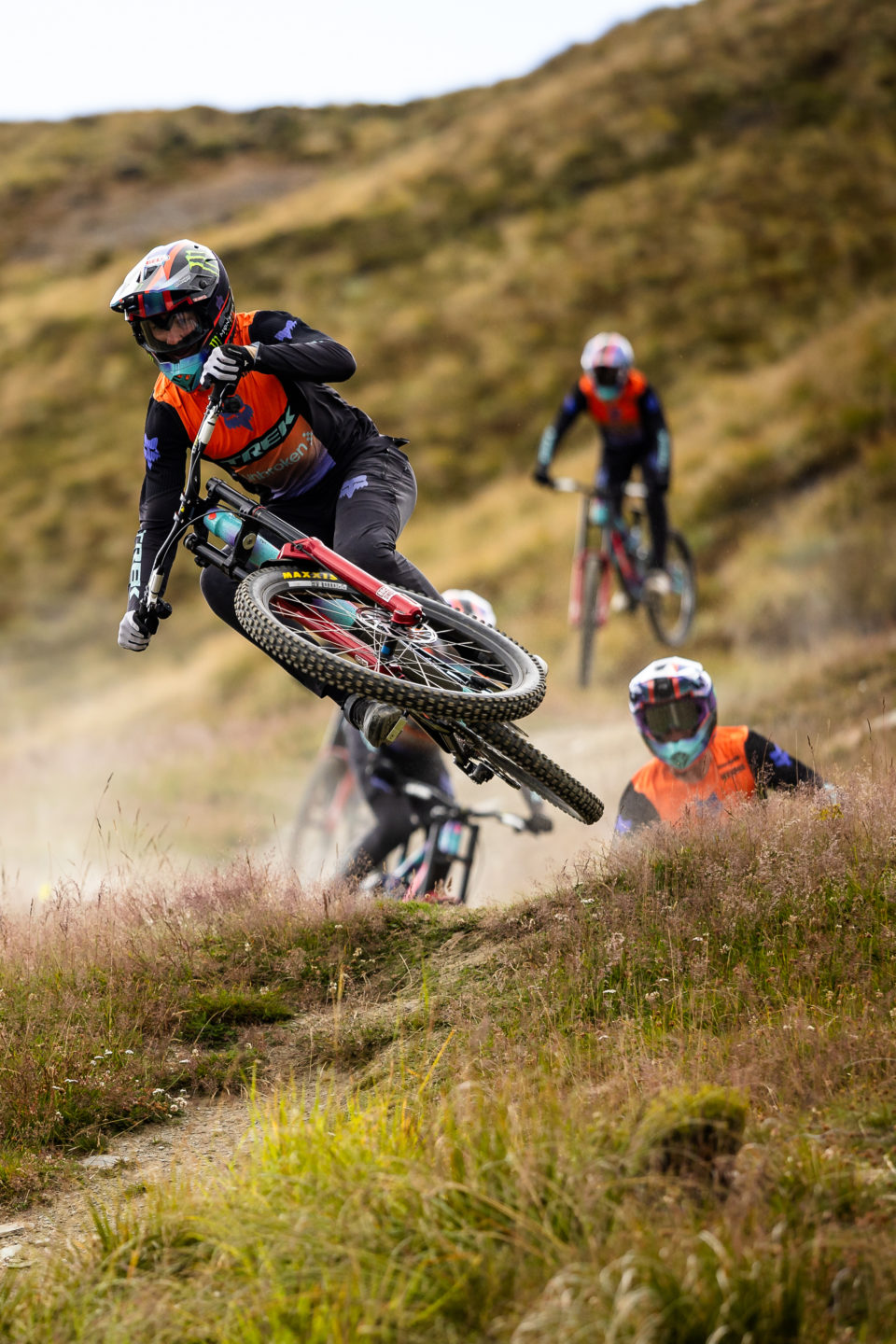
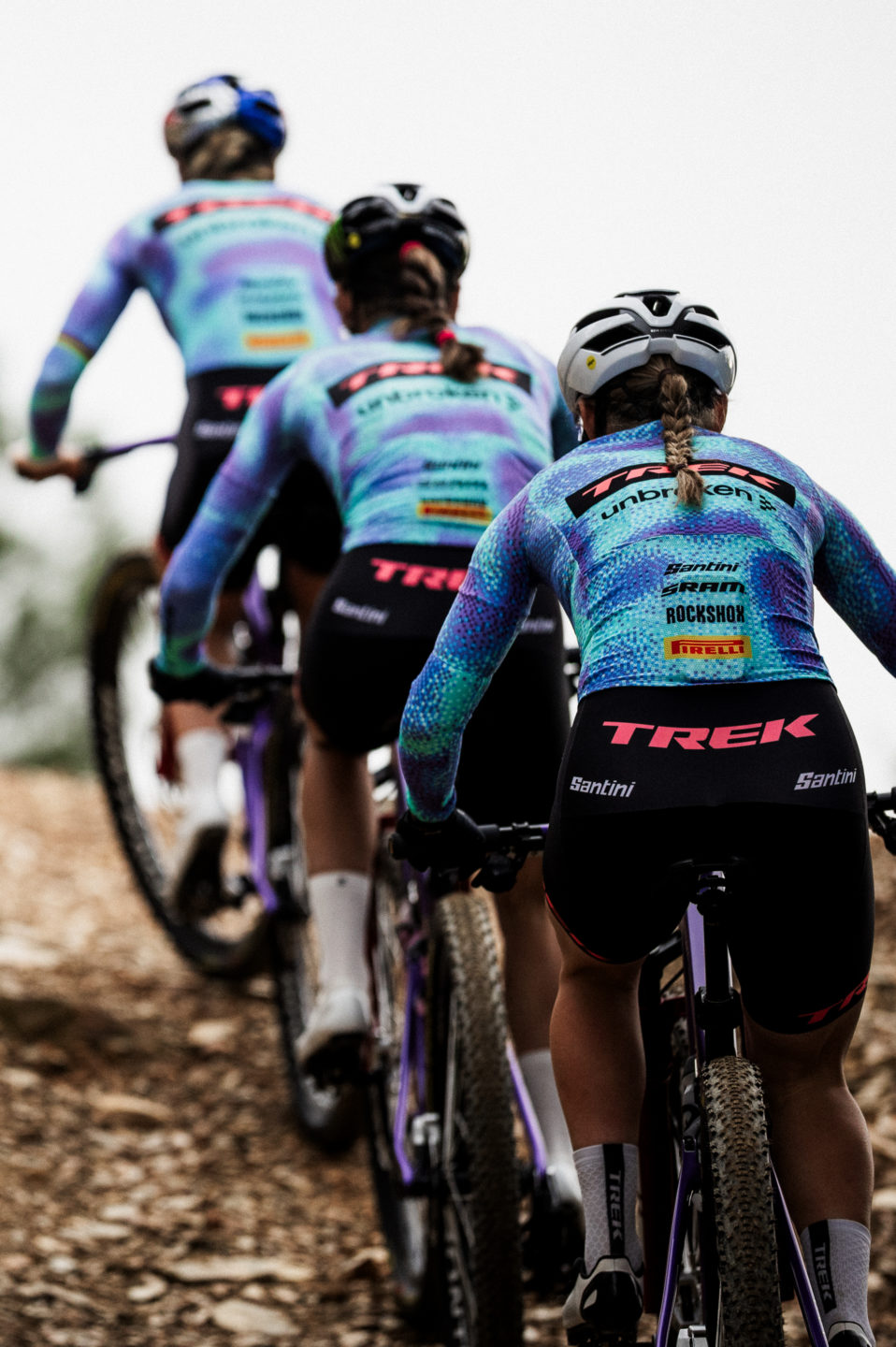
Ollie Davis of Trek-Unbroken DH and Nina Graf of Trek-Unbroken XC may race two very different disciplines, but they’ve had mirror seasons. Davis started the year qualifying for four straight finals, finishing as high as 20th in Lenzerheide, but missed out on finals in the last two races before the break. Graf has consistently finished in the Top 15 in Olympic-distance XC racing, placing as high as ninth in Nové Město, but struggled in short track down the stretch, unable to find the top-end power to stay with the pack on her opening laps. She placed 31st in her last two World Cup XCC races.
“I had such a good race pace from the second lap on — I felt like I’m unstoppable, like I’m flying. But the first lap, I was always struggling,” Graf said. “I recognized that in the last race block, but you can’t change anything in this tight block of racing.”
Both Graf and Davis looked at the midseason break as a chance to get back to their Week 1 forms. They raced four World Cup races in five weekends, soaking up the stress of not just racing, but constant packing and shuttling from one remote European outpost to another.

Nina Graf putting down the power in her first World Cup XCO after a long summer break.
“The whole way I look at it, and I think it’s important, is to go into the next World Cup refreshed, like it’s the first one again,” Davis said. “So I use this break to get in the training I definitely need, but also to come into the next World Cup as refreshed and ready to go as possible, so you can finish the last four races as best you can.”
Athletes want to decompress as soon as they have a big chunk of time for themselves. Davis fully unplugs. He doesn’t touch his downhill bike for two weeks. Instead, he prioritizes time with family and short trips with friends. He makes time for gym sessions and long road rides, but his training isn’t structured. Mostly, he’s focused on making up lost time with the people he rarely gets to see once the season starts.
Graf didn’t stay off her bike long, but that’s because riding is therapeutic to her. She took a week “off,” but says she spent 30 hours on the bike. She deviated from her routine with long, pressure-free, mind-clearing base rides, in which she could pay no mind to performance numbers and simply reconnect with herself. She even took a two-day bikepacking trip by her lonesome.
I just wanted to be in the moment thinking about life, and thinking about the small things and the big things.
- Nina Graf, Trek-Unbroken XC
“I didn’t have AirPods because I felt like I didn’t want to hear music. I didn’t want to hear podcasts. I just wanted to be in the moment thinking about life, and thinking about the small things and the big things,” Graf said. “It’s important to also take a break for the mind.”
Neither rider wanted to be anywhere else but home. An exotic trip may sound like a good use of time off, but professional mountain bikers have plenty of airport security lines and bad leg room in their lives. Better to be back in familiar environs, where they can surround themselves with family and friends who can plug them back into a more normal routine.
Both Davis and Graf take mindfulness and rest very seriously. Athletes tend to be hyper-competitive individuals. That mindset is necessary on race days, but it can be detrimental to training outside of competition. For weeks, their minds have been trained on the minute details that help them ride faster. Switching off — even when it’s beneficial for recovery — isn’t easy.

The conditions in Les Gets gave riders a rude welcome.
“You’re always thinking about, what can I improve? The goods and the bads from the previous races, everything like that,” Davis said. “Even when you’re just laying there, and I find it really hard to switch off, but it is something I’m working on.”
One of the biggest threats to proper mental rest is screentime. Graf’s answer was to head into the woods. Davis, meanwhile, has become a disciplined reader both in and out of racing, especially before bed so that he can have at least one hour without blue light in his eyes. (He read the book “The Happiest Man on Earth” by Eddie Jaku over the first half of the season and gives it his wholehearted recommendation.)
Physical training is easy to manage in comparison. Both Graf and Davis work with coaches who give them flexibility in their workouts once they do return to more focused training. Davis is big on skiing and moto riding, for example. They both have relatively set plans for their five-ish weeks off, but their training is also responsive to how they’re feeling. Graf explains that if she has intervals on the schedule, the number and intensity can be adjusted based on how she felt in recent days.
Even when you're just laying there, and I find it really hard to switch off, but it is something I'm working on.
- Davis
Having family and friends nearby helps make the training feel novel and refreshing. Graf will often ride with her husband on weekends, and with friends on weekdays when her husband’s at work. Understandably, her riding partners sometimes struggle to keep up with a professional cyclist, but they’ll still do the same workouts. Graf appreciates knowing that someone else is suffering alongside her.
Davis and Graf return to race-intensity training in roughly the final two weeks of their break. By then, they’re filled with motivation for the closing stretch of the season, champing at the bit to get back to competition. To some extent, they’re both chasing the consistency and power they showcased during the early weeks of the season, and proper rest can only help.
Of course, their peers have also been working on mind, body, and soul in the interim weeks. Ultimately, they have to line up and prove themselves in the moment, like always.

Graf is focused on building her top end speed to improve her short track performance.
On a rain-soaked race weekend in Les Gets, the Trek-Unbroken squads were quickly thrust back into the grind of racing. Graf had a strong first lap in short track, but couldn’t hang near the front through the power-sapping mud, finishing 25th. Davis fared a bit better on a sloppy downhill course, going through to finals comfortably on his first qualifying run, then finishing a season-best 16th. Graf was 17th in XCO on a day that she said “just didn’t click.”
No matter how well you prepare, race day will always test you in unexpected ways. Pushing past the obstacles is often a matter of mindset, which doesn’t simply materialize after weeks of well-tailored rest and training.
“I’m figuring out that when I do perform well, my mind’s really calm. There’s no background noise, and it allows me to focus on the one thing that’s happening a lot easier,” Davis said. “That’s one thing I’m trying to do in my warm-ups and leading into the weeks is just having a calm mind and getting everything planned out, so there’s less wheels in my head spinning.”
I feel like I'm the same athlete, but a bit stronger, in the mind and in the body.
- Graf
The midseason break is long, but not long enough to make the first and second half of the seasons feel truly distinct from each other. Davis and Graf wear every triumph and struggle on their person, with every performance informing what’s to come. That’s what a season is: A build, all culminating in a stretch run that will define their year, beginning at World Championships this weekend.
“It feels like the same season, and more like the final stretch of the season but with the biggest goal,” Graf said. “I feel like I’m the same athlete, but a bit stronger, in the mind and in the body.
“Hopefully [laughs]. We never know until we’re racing.”