
How Brandon Semenuk videos keep rocking the internet, year after year after year
For a mountain biking film, “Afterlife” takes its time getting around to mountain biking. The opening shot is a swift pan over a sunburnt plateau. A bike and a mountain biker enter the frame after 15 seconds, but they’re quickly swept away by the camera, discarded like misplaced objects.
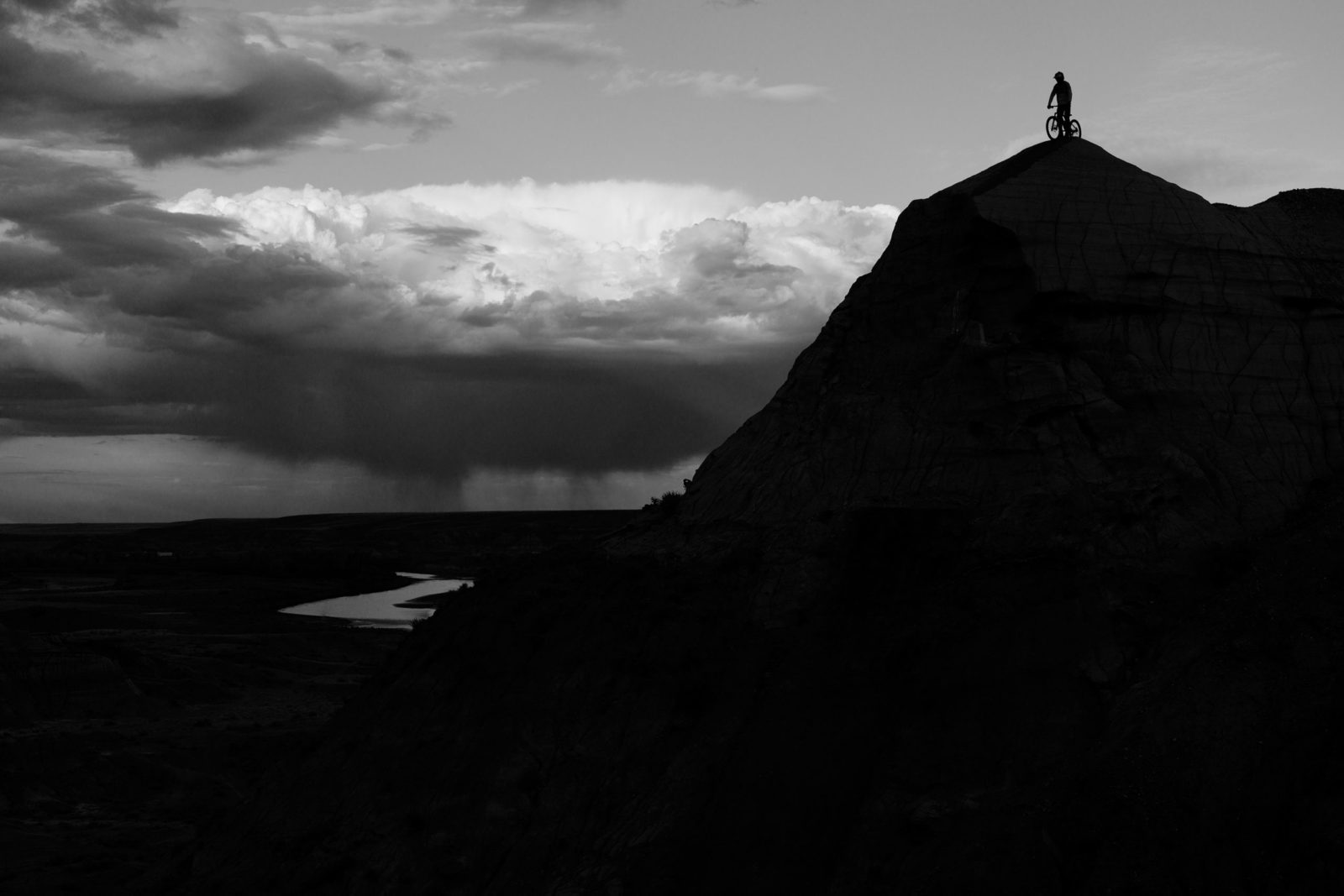
Brandon Semenuk is one of the most innovative and accomplished mountain bikers ever, but he’s a prop at the start of his own film. He doesn’t do a trick for nearly a minute. Instead, we see him mostly as a silhouette in the low morning light, overshadowed by the landscape.
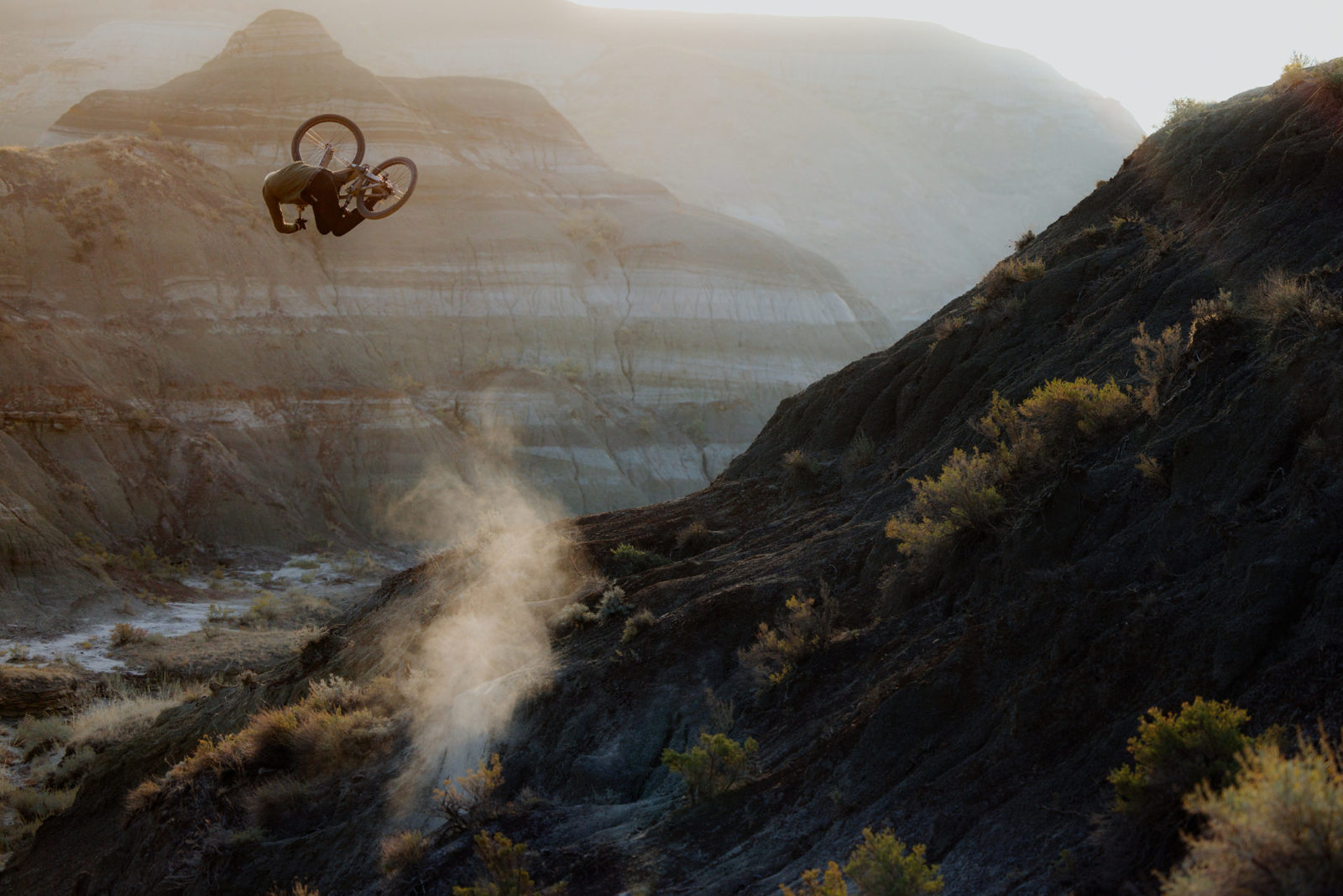
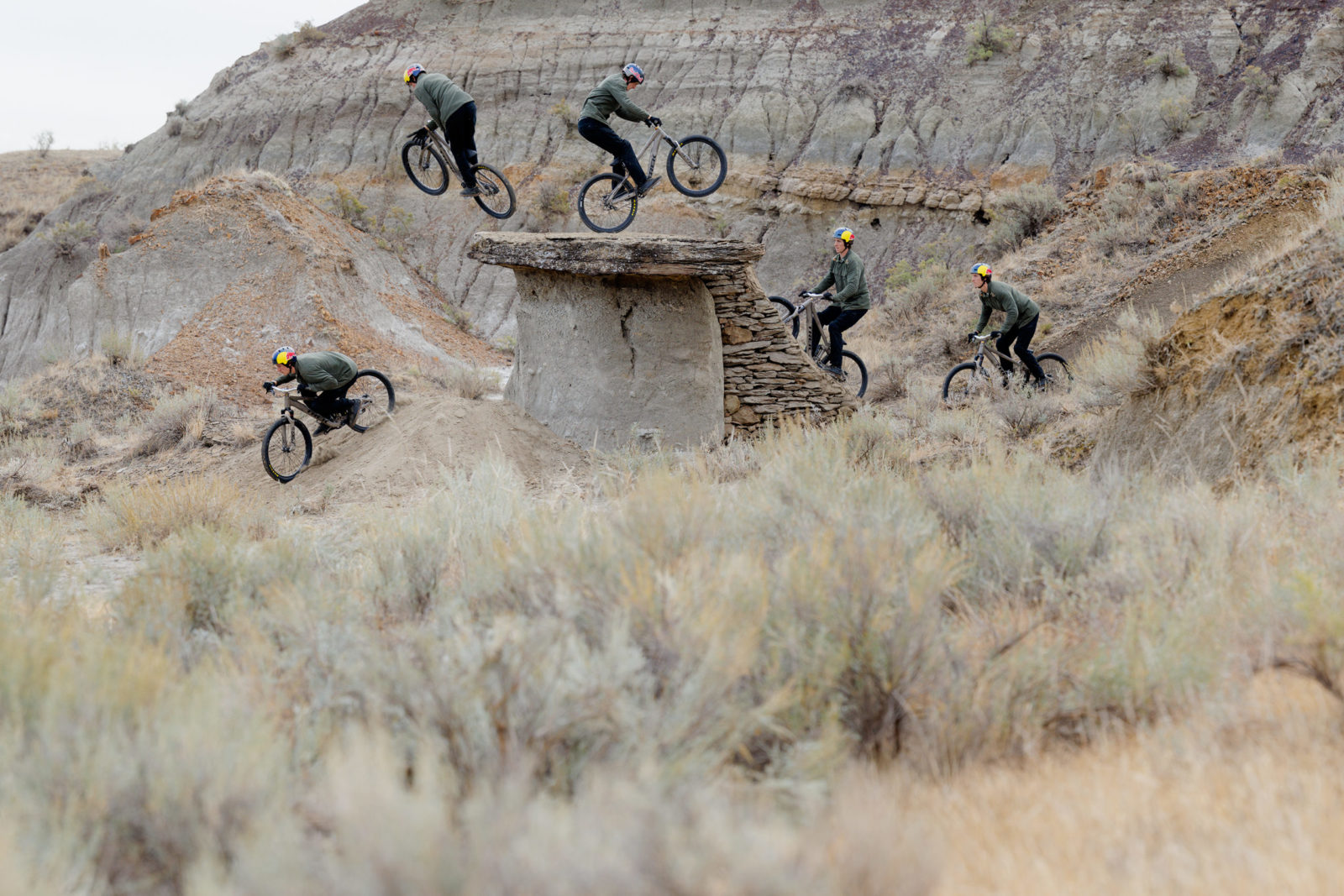
The film is composed of dreamy movements. A lot happens in just five minutes and 52 seconds. The tempo picks up around 1:34, and Semenuk finally comes to the fore, delving deep in his bag of tricks, largely filmed with static cameras that use the landscape as a canvas.
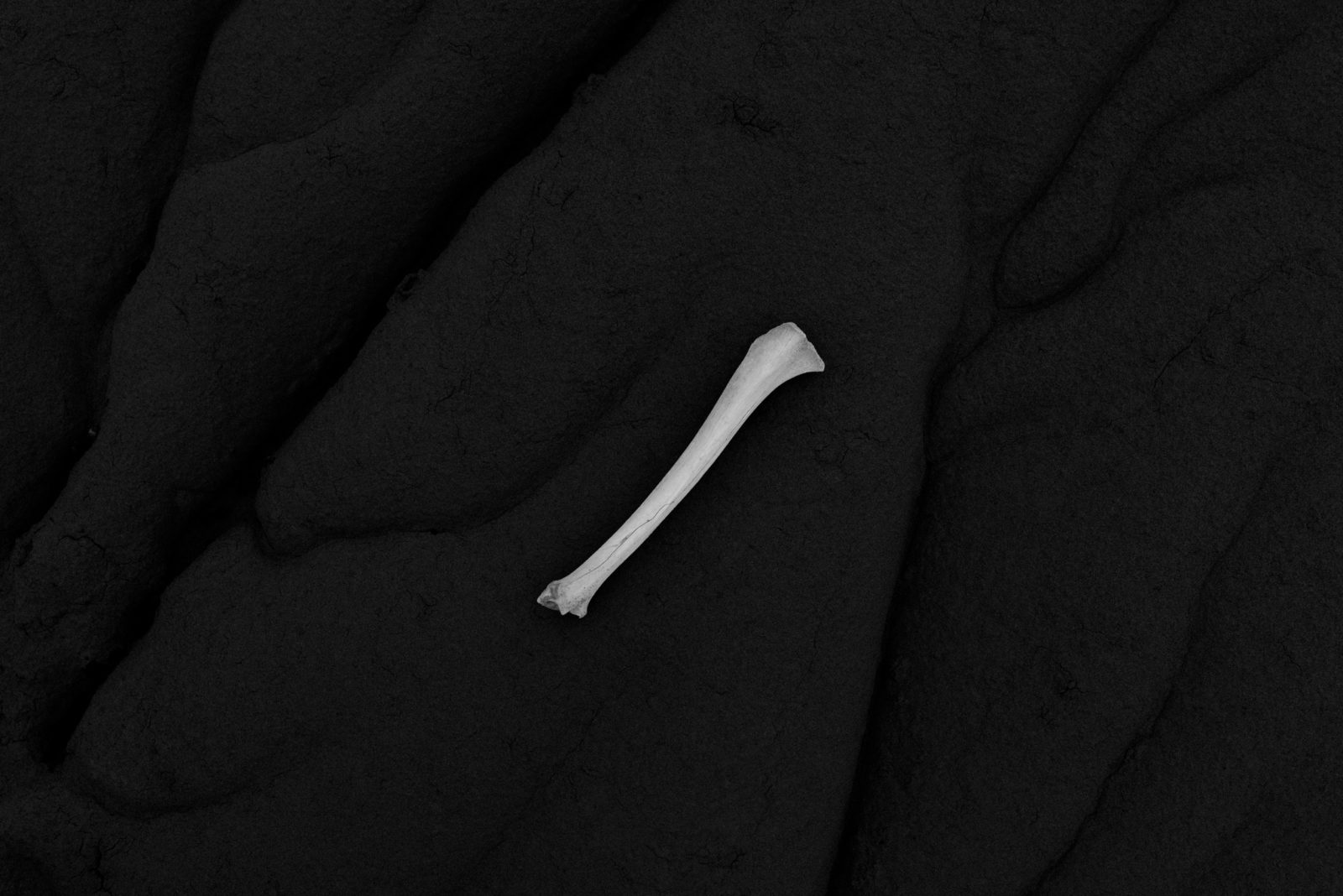
Then at 2:12 we enter a black-and-white fever dream, and the video seems to be saying something more. Bones flash on the screen. Semenuk is sprawled on his back, situated within a heart-shaped indent in the ground with veins running from it. He rises from the ground, rigid, as if lifted by a spirit. Is the implication that Semenuk was dead and now resurrected? A narrator says, “The footsteps of those who roamed the Earth before us echo through the corridors of the afterlife.”
A relaxed on-shoot atmosphere doesn’t occur by accident. The reason why Semenuk videos can be shot and edited largely by feel is because they’re made by roughly the same group of people every time. Semenuk’s team of diggers and filmers came together over time. From having worked together so long, they’ve internalized what makes a Semenuk video special amidst the deluge of mountain biking content pouring daily through your social feeds.
Everyone is close friends, which certainly helps in a collaborative process, but they’ve also all proven that they can do quality work up to the standards of one of the most dialed riders on the planet.
Wallen started working with Semenuk the way most people do: By becoming friends, first. Wallen didn’t even own his own camera when they met. He began assisting another mountain biking filmmaker, Clay Porter, and eventually bought secondhand equipment that he used to capture a few odd clips of Semenuk whenever they happened to be riding in the same spot.
“Pretty much when I was learning to film, I was just filming Brandon Semenuk, which was crazy.” Wallen says. “Learning my cameras and blowing shots and just sucking at it. But I was shooting the best of the best at the coolest location. So it was a silver platter at the time.”
I had a plastic bag, and I would be collecting bones the whole time.
- Toby Cowley
It’s a lot to take in. The level of detail is almost maddening to process when you think of it at a minute level. Is this a mountain bike video or a meditation on man’s place in the eons of Earth’s history? Which is more important, and why does it somehow work on both levels? How does something like this even get made?
Let’s start where the video makes its most vexing turn. Let’s start with the bones.
“I don’t know, specifically, who had the idea to shoot the bones,” says Toby Cowley, the shoot photographer and one of Semenuk’s closest and longest collaborators. “I just got very excited about it. … I had a plastic bag, and I would be collecting bones the whole time.”
The way the bones were utilized in “Afterlife” is a microcosm of how a lot of Semenuk shoots unfold. Very often, Semenuk and his team arrive on site with no concrete idea of what the film will look like, or what it’s “about” beyond Semenuk riding in an atmospheric locale. As soon as digging begins, the crew begins absorbing the surroundings, and whatever they see and sense and feel in the moment becomes, after several steps, one of the many polished, mind-bending Semenuk joints that have been breaking the mountain biking internet for more than a decade.

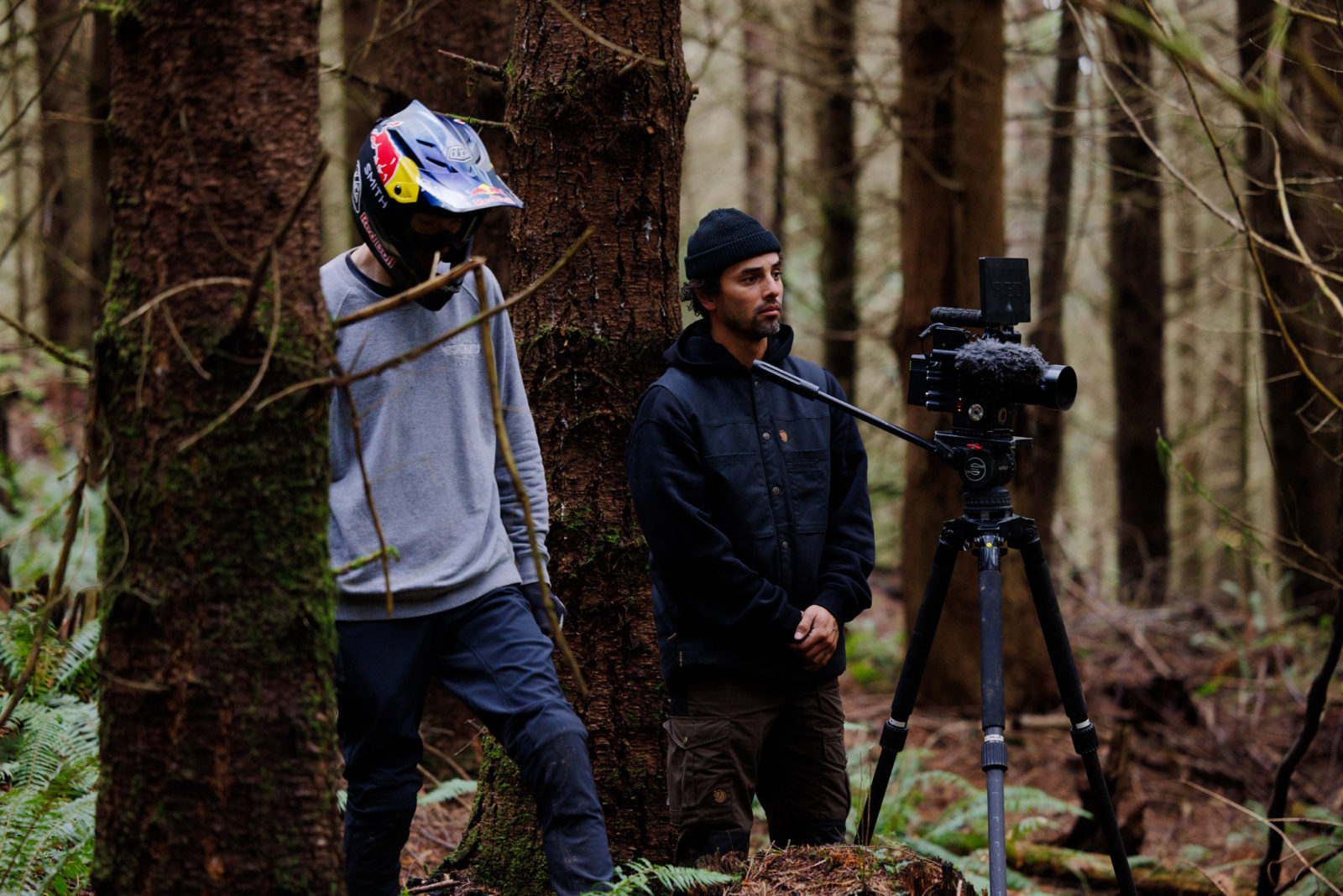
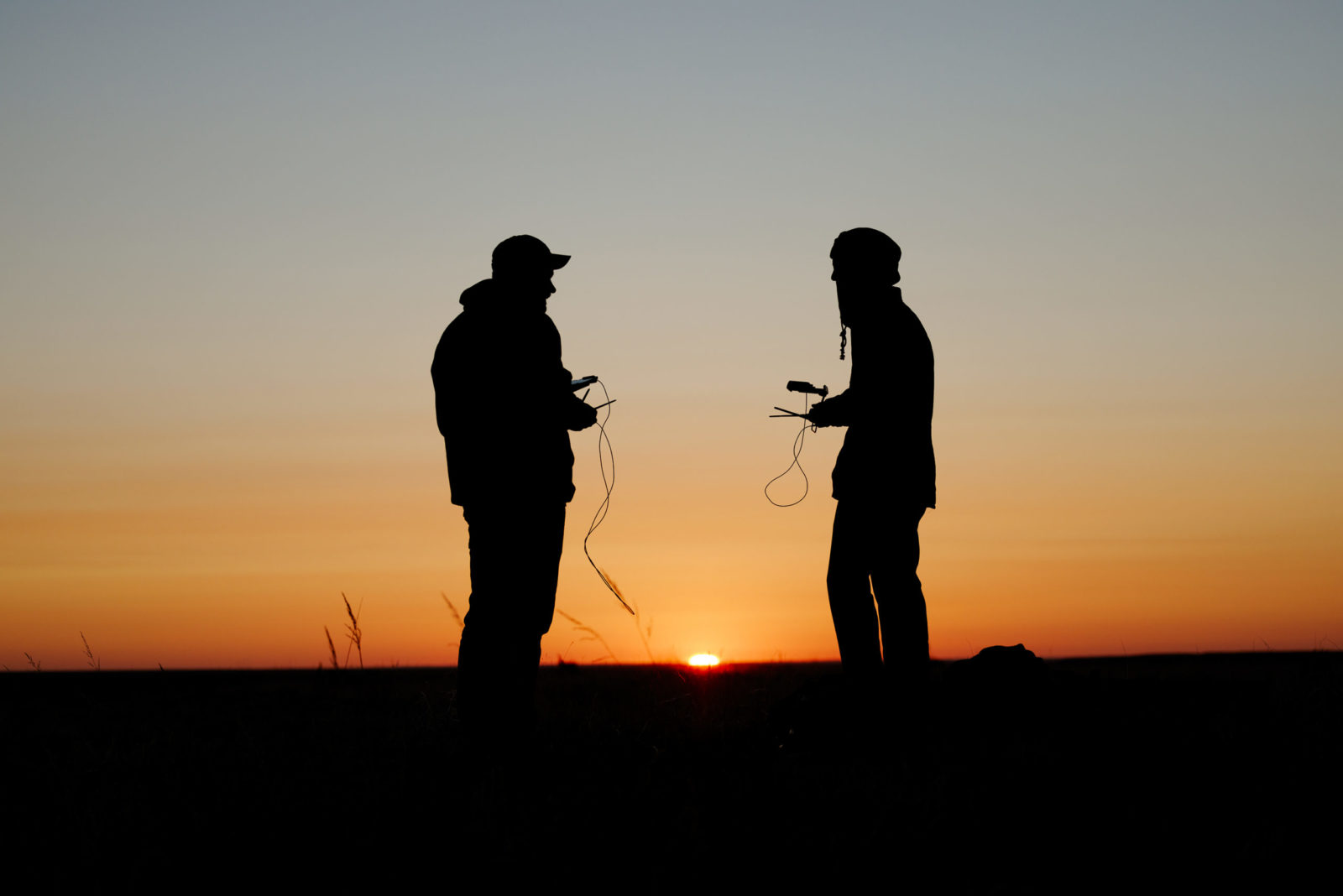
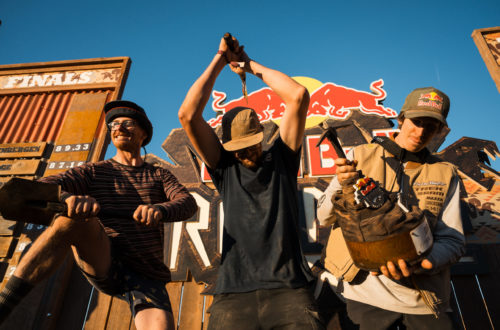
Brandon Semenuk and Isaac Wallen shooting "Afterlife" | Photo: Toby Cowley

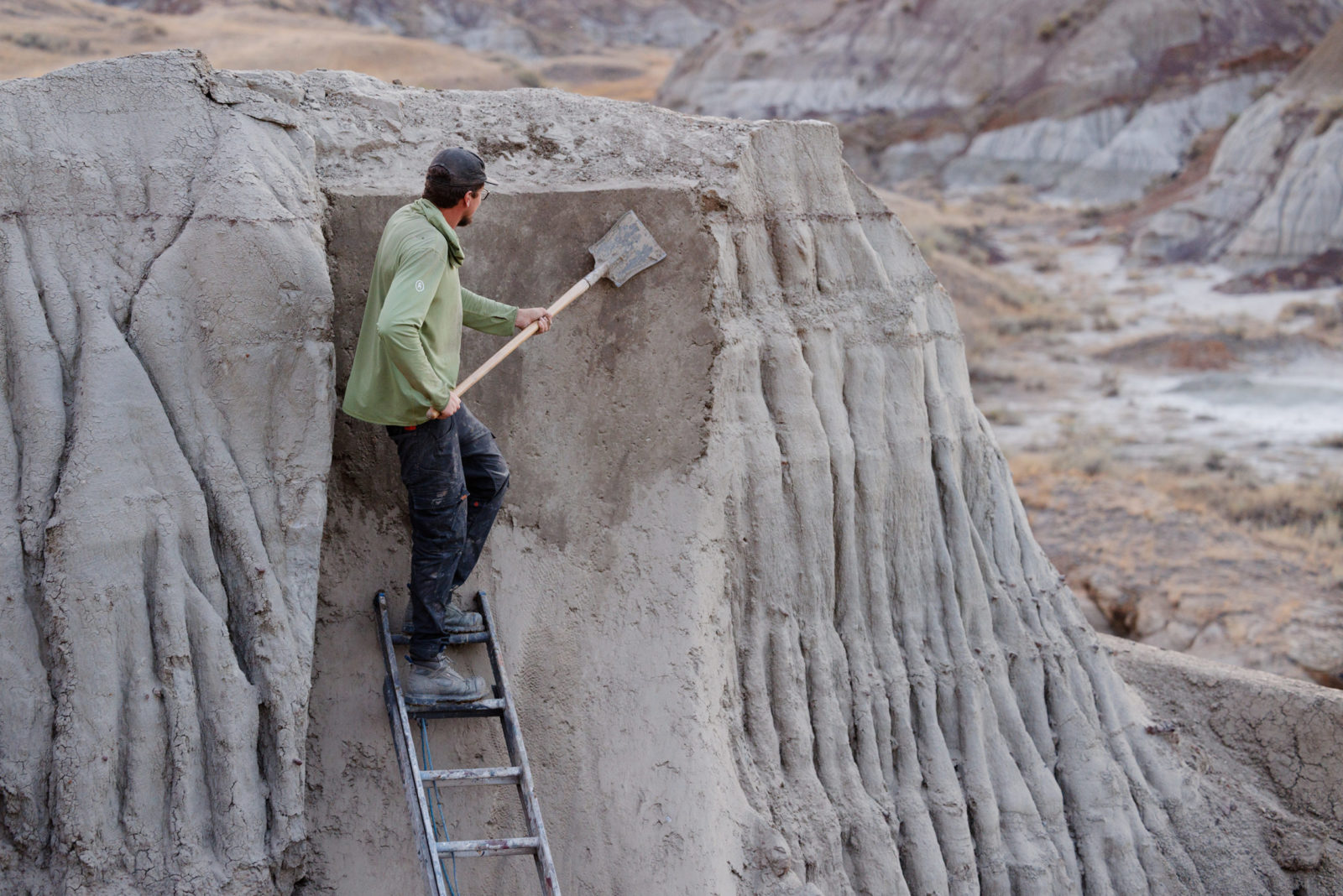
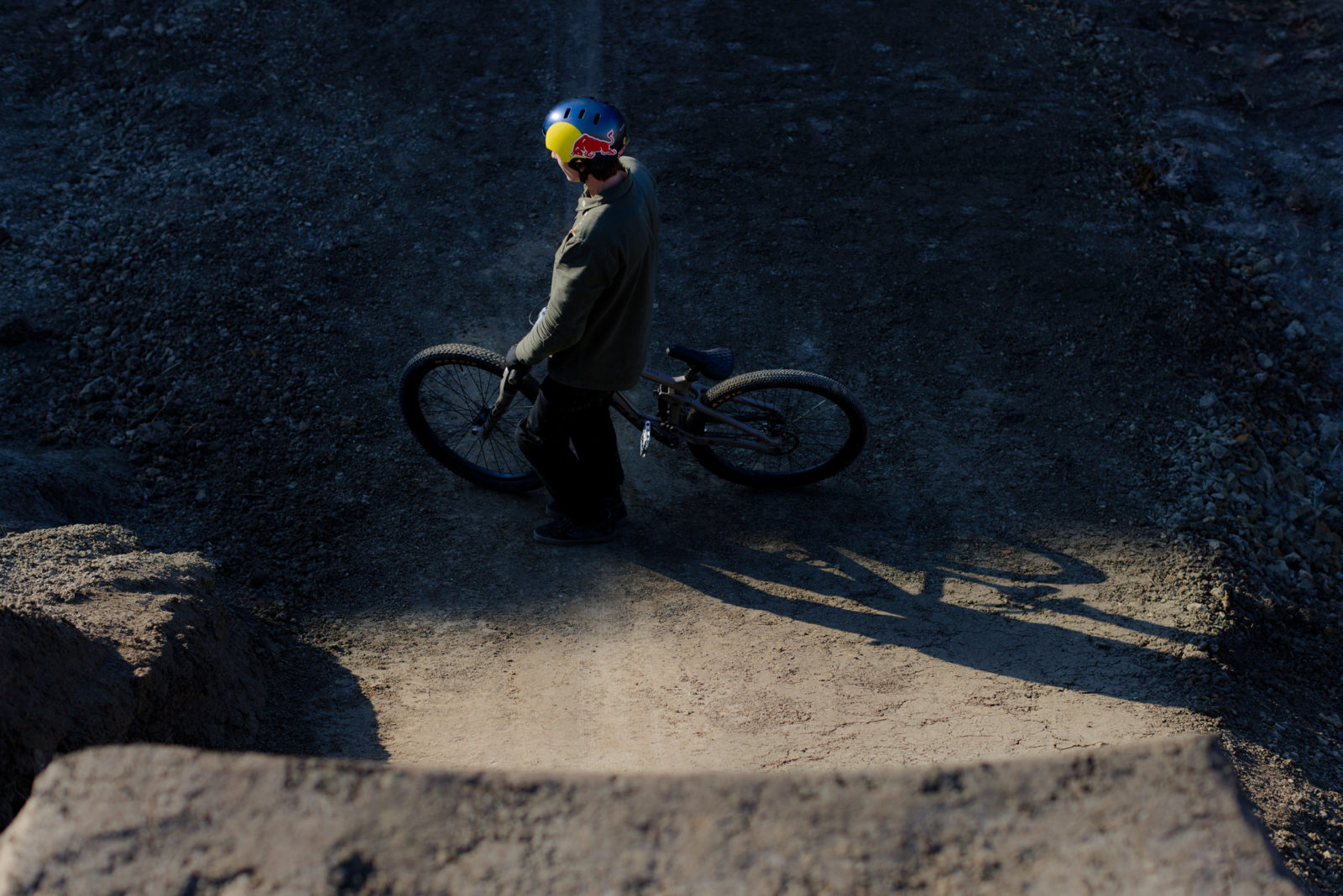
Prepping the scene on "Afterlife" | Photo: Toby Cowley
So yes, Semenuk videos are about vibes, but to leave the story at that is too simplistic. It’s hard work making art look so effortless.
The bones were only kinda/sorta a happy accident. “Afterlife” was shot in the badlands of Alberta, which has one of the highest densities of dinosaur fossils in the world. The bones found and shot for the video may have been old cow bones, mind you, but they effectively evoked the ancient history of the area nonetheless. And the fact that the crew was even in one of the most remote areas of Canada was due to the meticulous work of one man: Brandon Semenuk.
Location is arguably the most important piece of any great mountain bike video, and there may be no greater repository of incredible locations than Semenuk’s brain. Throughout a long career, he has personally scouted countless riding spots based on tips or his own research. Not only does he know what places will film the best, but also where the dirt is suitable for riding and building. And his reserve runs deep. According to Isaac Wallen, the editor on “Afterlife” and another longtime collaborator, Semenuk had been holding onto the film’s location for years, waiting for the right time to film it.
“It’s insane. I feel like he back pockets a lot of things,” Wallen says. “He’s like, ‘Yeah I scouted this spot in Brooks, Alberta, like, five years ago, and I think we should do this there.’ And I’m like, ‘Cool, sounds good.’ [Laughs.]”‘
Watch Semenuk’s newest release, “RGB,” a trip “chasing light through the contours of the earth”
Pretty much when I was learning to film, I was just filming Brandon Semenuk.
- Isaac Wallen
Semenuk would occasionally use Wallen’s clips on social media, and eventually he reached out to see if Wallen wanted to work on a full video shoot. In those early days when Wallen was on site, Semenuk would ask to check his camera after filming a trick to see how it turned out. Gradually, Semenuk asked to check less and less, and Wallen became one of Semenuk’s most trusted collaborators.
“I feel like it’s this funny unspoken thing, where he’ll do something, and sometimes he doesn’t even look at my shot, because he’s like, ‘I just trust you got something,'” Wallen says. “It used to be that he would have an influence on what angles and what lenses.
“I always shoot with Nick Genovese on these projects, an amazing filmer. But we don’t even talk. I know what shot he’s shooting. I know what lens he’s gonna put on for this trick. We just know we’re gonna get it.”
That ingrained filmmaking process can build a visual language from just a seed of inspiration. Wallen says they’ll often start with a song, one that feels right for the location, or has been stuck in their brains leading up to the shoot. With a loose notion of what the film should feel like, they can put together the tricks and shots they want to shoot on site, while keeping the plan flexible.
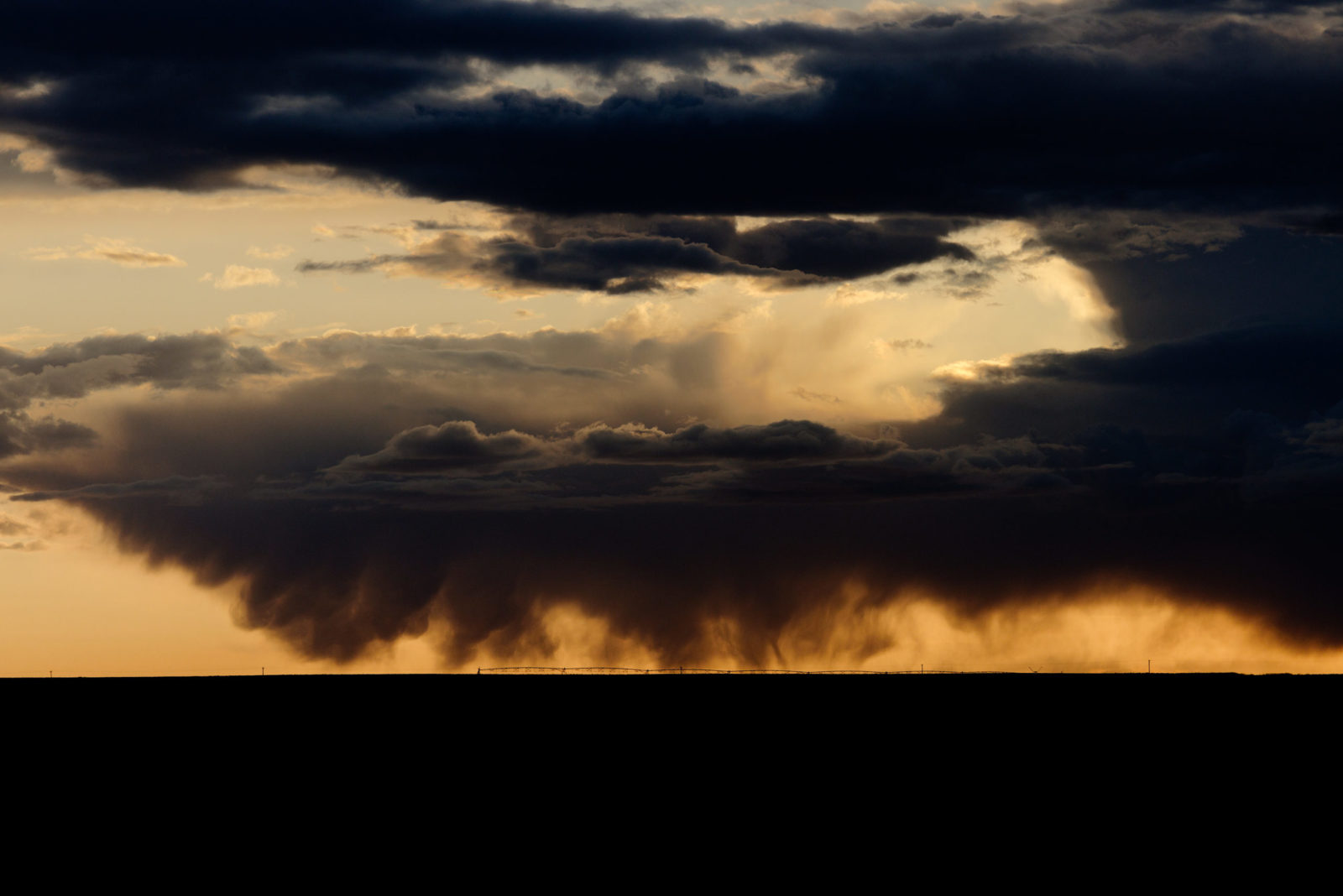
“There’s probably a base idea, but that idea needs to be able to be manipulated, and we can work around whatever curveballs we get thrown,” Cowley says. “The weather is always such a crazy factor that we have no control over. And maybe we think we’re going to get all this cool sunset light, but then it ends up being overcast the whole time.
“I don’t think you can go into it and be so set on, ‘This is how it’s going to be,’ because otherwise you’re maybe setting yourself up for failure. You need to be able to adapt and figure things out as you go.”

The bones | Photo: Toby Cowley

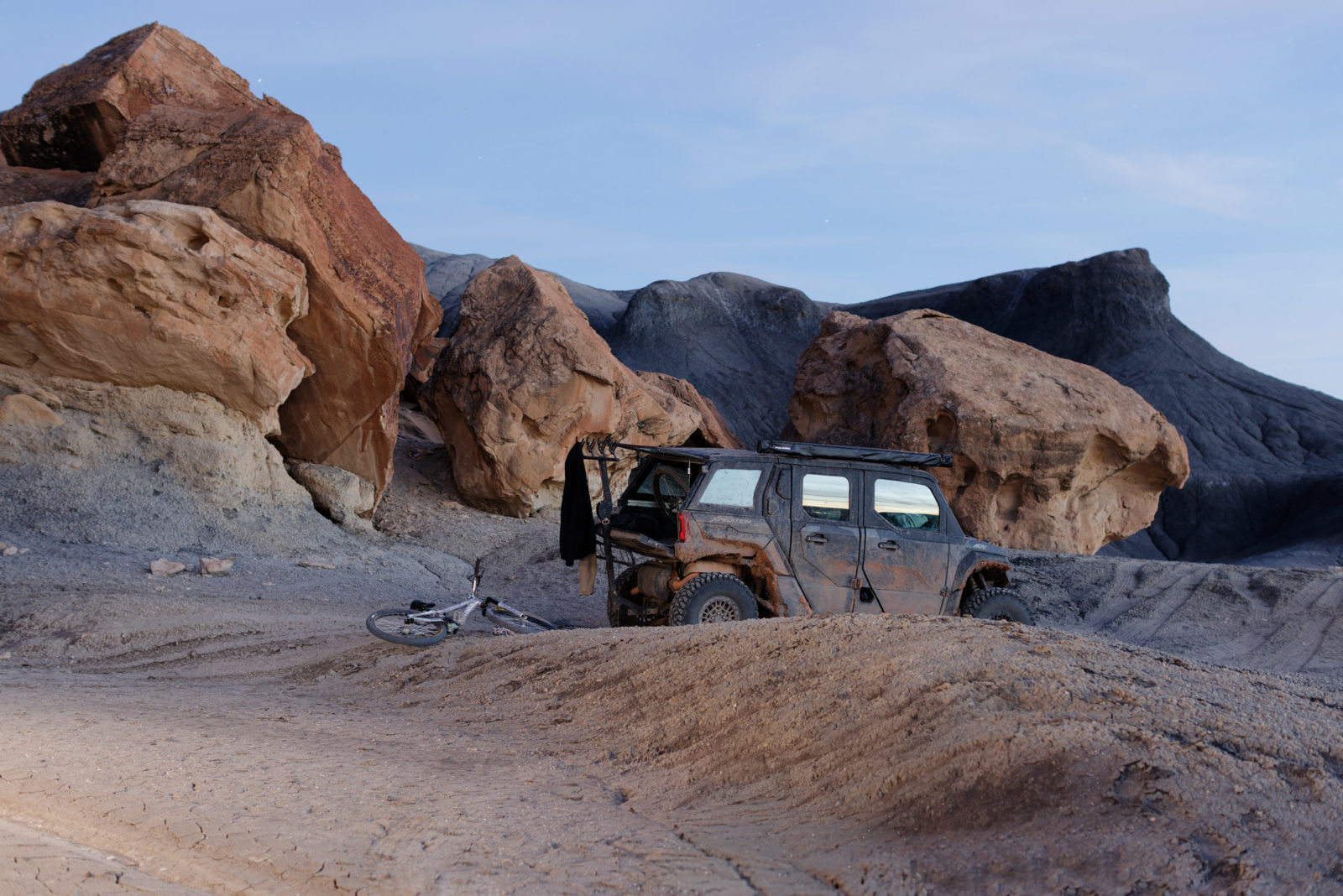
The gear | Photo: Toby Cowley
Every Semenuk film is built in layers. Editing doesn’t begin after filming has ended, but in the midst of it, with everyone within earshot weighing in, whether they’re there to ride, film, or dig. That goes for what tricks Semenuk will do, too. He may be the headliner, and the only person in the world capable of executing his level of precision and flair, but he trusts his friends to help him brainstorm what will look best on film.
Semenuk may have final say on his projects — they are, after all, his projects — but rarely does it feel like he (or anyone) is “leading” the process, according to Wallen. One of the benefits of editing on the fly is that adjustments can be made well before any creative decisions have hardened and affected the rest of the film. In that way, Semenuk is never dictating direction; he’s one of several people in a constantly churning conversation about what the film should look like.
“Even just with the way Brandon works with diggers and builders, it’s very collaborative. Everybody throws their two cents into the pile,” Cowley says. “Like, ‘It’s a cool idea, but maybe it won’t work for this reason. What if we tried this?’ And I think it’s the same thing with filming. Brandon leans on us to do our job well.”
Perhaps the only authoritative rule of a Semenuk shoot is Do Something Different. Semenuk has always been averse to repeating himself. That’s been true every time he has competed at Red Bull Rampage, and it’s doubly true on his film projects, which release to sky-high expectations within the mountain bike community.
Every video can feel the same as the last if you continue to take that influence from the same place.
- Wallen
Ten years ago, Semenuk film segments would drop on the internet like a bomb. There’s a good chance you’ve already seen his 2015 one-shot segment from “unReal,” nearly two minutes of blissfully smooth riding set to Buffalo Springfield’s “For What It’s Worth” that is now up to 7.7 million views on YouTube. Roughly a year later, he starred in “Lapse,” an equally influential video with very different vibes. Both Wallen and Cowley cite it, unprompted, as one of their favorite Semenuk videos ever. Shot by Rupert Walker, “Lapse” is as much a horror pastiche as it is a ride video, and it burrows into your brain in much the same way as “Afterlife,” layering music, environment, editing and imagery in a way that somehow enhances Semeuk’s already-otherworldly ability.
Semenuk videos have not gotten any less remarkable over the years, but the genre has become more saturated with riders who are pushing visual boundaries in their own ways. It’s harder to impact audiences today than it was in the 2010s. But Semenuk and his collaborators continue to stand out in part because they take inspiration from outside the relatively small sphere of mountain biking content. They are constantly sharing songs, photos, illustrations and videos with each other, even in the dead periods between shoots. They also look to other extreme sports — snowboarding, surfing, skating, rally driving, etc. — to see how those creators are playing with form and function.
“I feel like the sport is growing at an insane rate. It’s become mainstream, and it’s so cool to see, but I feel there’s so many video projects that come out every day, I can’t even keep up,” Wallen says. “It becomes overstimulating, in a way where every video can feel the same as the last if you continue to take that influence from the same place. It’s very easy to stay on that trajectory of just repeating and filming what you think people want to see.”

Shooting in the lowlight | Photo: Toby Cowley

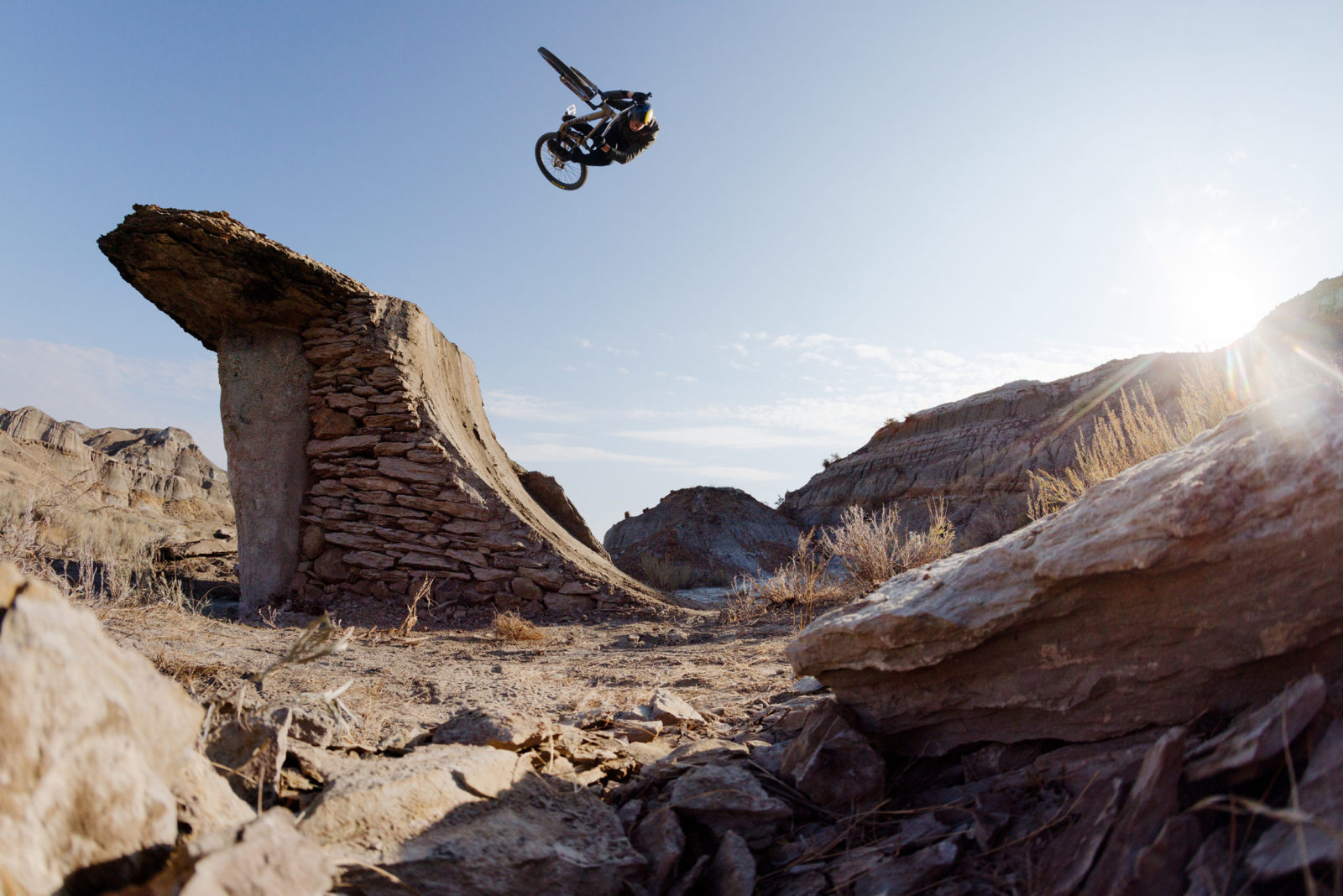
Semenuk in the sun | Photo: Toby Cowley
It may seem counterintuitive, but the continuity of builders and filmers from project to project helps keep each release feeling fresh. Each shoot inherits the knowledge of what’s been done before, and above all, no one wants to do the boring working of simply recreating what fans have loved in the past. They have a collective drive to evolve, stemming from a rider who has never sat still in his life.
“I think it’s easy, especially as you get good at something, to be like, ‘Well, I have this formula and it works, and I know that it works, and I’m getting results,’ but I don’t think Brandon is like that,” Cowley says. “He’s always like, ‘Well, let’s do something different. Let’s take a risk, and maybe we fail. And if we fail, people don’t have to see it, but we may as well try.’
“Usually when you get to a build, you’re like, ‘well, this makes the most sense,’ or, ‘this is the obvious angle,’ … but if [Brandon] is doing it, I feel like I owe it to him to be different as well.”
Despite the well-honed creative process, don’t get the impression that producing a Semenuk video is easy. Building unique features is precise and brutal work, and the hours can be endless. The crew spent 17 days in the desert to film “Afterlife,” and ran up sleep deficits between editing and preparations for each day’s shoot.
Once you're a couple weeks into that, your brain starts to get kind of crazy, and you're in this headspace … I think the ideas maybe just get a little bit weirder.
- Cowley
Loopiness sets in when you’re working that hard, and there’s no remedy for it when you’re constantly trying to reinvent yourselves and set the bar higher with every new release. The only way to fight fatigue is to not fight at all, but mine the strange spaces your brain wanders when it’s low on resources.
“We’re staying in a smallish town, and we eat at this one little diner every day. Once you’re a couple weeks into that, your brain starts to get kind of crazy, and you’re in this headspace … I think the ideas maybe just get a little bit weirder,” Cowley says. “But it all worked out in the end. [‘Afterlife’] was a very fun project for me, just a great crew of people — the builders, the filmers. Brandon, obviously, is unreal to work with.”
Part of Semenuk’s case as the greatest mountain biker ever is that fact that, after so many years, he is still the cutting edge of the sport as an artform. “Afterlife” was named Pinkbike’s 2024 Video of the Year, an honor the site also bestowed on his first “Parallel” video with Ryan “R-Dog” Howard in 2019. (The sequel, “Parallel II,” starring Semenuk and Kade Edwards, is also incredible.)
You can lose hours revisiting Semenuk’s old videos; in fact, binging them is a great way to experience their desired effect. At a certain point, you stop thinking about the obtuse details and just let the stimuli wash over you. What you feel is a very close approximation of the magic and mood that the creators felt on-site. Every film is a transposition of a certain place and time into your brain stem. Watch them in the proper frame of mind, and you may enter a flow state, not unlike what the people who made the film experienced during their time with it, nor unlike how mountain biking feels in its most transcendent moments, when the light, dirt, and landscape are all just right.

Wallen and Semenuk on their latest release, "RGB" | Photo: Toby Cowley

Art | Photo: Toby Cowley
“I talk about this sometimes with my filmer buddies, but I kind of miss being not attached to some of the Brandon projects,” Wallen says. “Like, I miss having the feeling of going to Pinkbike and seeing a video get posted … and I just get to have the classic feeling of watching a Brandon video for the very first time.”
The last two minutes of “Afterlife” are pure play. Having properly screwed with your expectations, the video ends with one banger trick and camera angle after another, as the backing song — Fletcher C. Johnson’s “Gone Down to the River” — jams out alongside.
Remember the bones? You might have forgotten about them the first time you watched “Afterlife” come to a close, pushed from your thoughts as Brandon Semenuk did Brandon Semenuk Things in front of you. That’s OK; the point isn’t the bones themselves, but the afterimage they leave in your brain, the lingering sense that a sequence of freeriding clips is something more. What that “something” is doesn’t much matter. The point is that you’re transported.
“Afterlife” concludes with a receding drone shot over a low river. As the credits roll, the narrator returns, saying in his stately voice, “in the grand cycle of existence all things return to their original state, like a river merging with the ocean.” It’s a reminder that our lives run an inevitable course. Only the deviations define them.
More photos from Toby Cowley: