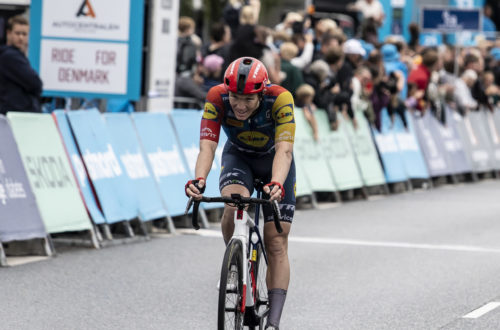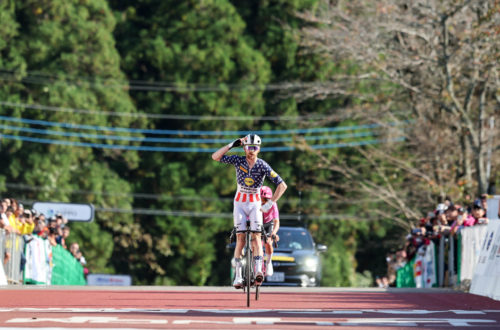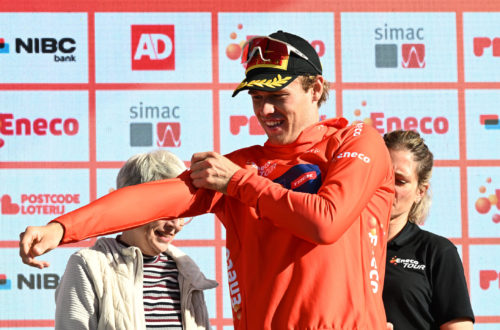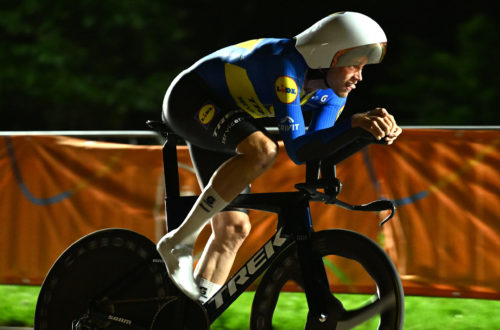

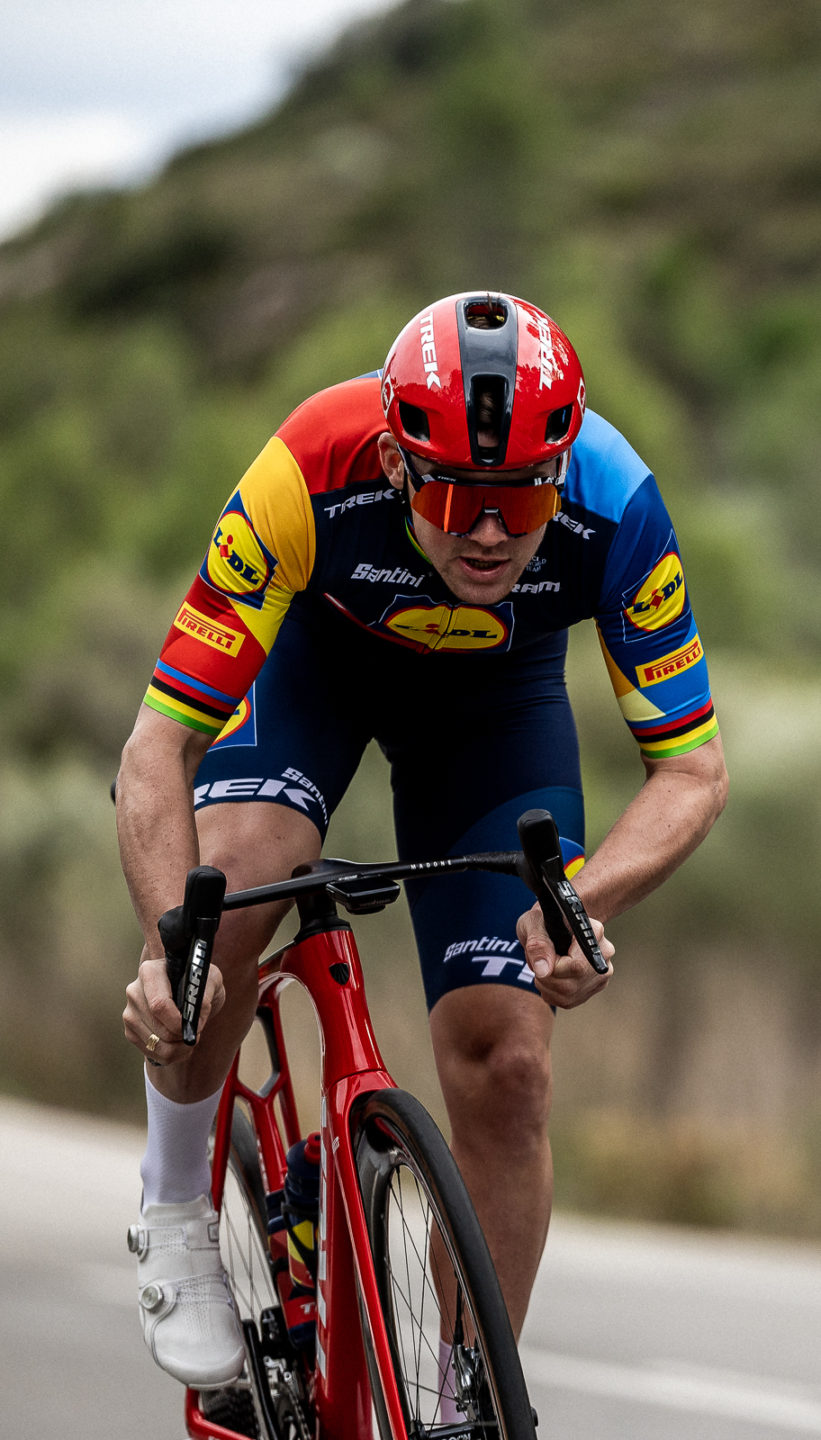

We speak to the Danish rider and his nutritionist Stephanie Scheirlynck about the right way to prepare and fuel the body for three brutal weeks of bike racing
The Tour de France peloton is made up of 184 professional cyclists. They stand as one collective unit in Barcelona at the Grand Départ, with three furious weeks of competition ahead of them. While they all have the same ultimate goal of finally making it to Paris after 21 sweltering stages, each rider in the bunch is markedly different. Some are targeting the general classification, some want stage wins and some are there to simply help their teammates. A handful will be counting down the days to the mountain stages with excitement, and others will be dreading the elevation meters ahead of them. The Tour de France peloton is certainly not one size fits all.
Neither is the nutrition needed to help each rider withstand the gruelling demands that come with completing a Grand Tour. What helps one man to grind his way over 180-kilometers of rolling terrain in the breakaway, might not work for another who sits in the peloton behind. The calories required for a rider dancing on the pedals up Alpe d’Huez, may not be the same for the sprinter suffering in the grupetto far back down the road. Lidl-Trek’s Head of Nutrition, Stephanie Scheirlynck, is well aware of this. She has been tailoring fueling plans for every eventuality in this Tour de France.

Photo: Russ Ellis
“We individualize everything,” Scheirlynck states. “We look at the rider, his profile, body weight and body composition. We have our own prediction tool where we predict how much energy each stage will cost this rider. On a sprint stage, if a rider decides to go in the breakaway, it will cost more energy than hiding in the peloton, for example.”
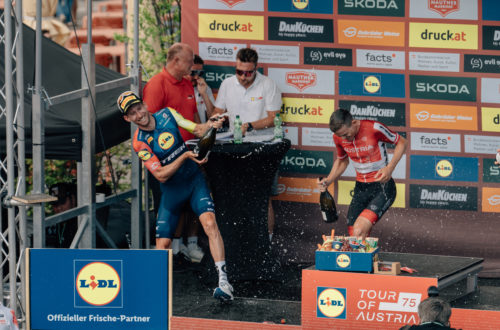
The Belgian woman – who has over 20 years of experience in the sports nutrition world – works closely with Tour de France stage four winner, Mads Pedersen. The Dane’s fueling strategy was crucial to ensuring that he had enough energy to sprint to victory after over 170-kilometres in the break to Foix.
“On that stage, we had Quinn [Simmons], Mathias [Vacek] and Mads in the breakaway. We had to be clear what type of stage it was and what their goal was in advance, so we could know what they would need. Then we did it a little bit like we do in the Classics, so we fuel a bit more in the evening before, the dinner and the breakfast – we really anticipate. If a rider eventually doesn’t make it into the break, we then might lower the number of carbohydrates they need to consume in the peloton that day. It’s super important to follow the flow,” Scheirlynck explains.

Image: Chris Auld
Getting nutrition optimised for a tough stage of the Tour is easily comparable to fueling for a one-day Classic – the type of racing in which Pedersen excels each spring.
“Nowadays, they start the race and immediately go full-gas with more than 100km to go. The race can already be decided, so you really need to load up your fuel, carbohydrates and start fueling up the tank a few days before,” Scheirlynck says.
“During the Classics they will always take the maximum amount of carbohydrates possible every hour – from the first fifteen minutes until the final. That’s where Mads knows that he’s someone who really can absorb and digest a lot of carbohydrates, which is also necessary for a few of the stages in this Grand Tour. They are really similar to a Classics block. Never that long in one day, but with continuous efforts, day by day, it feels like it.”
While detailed planning is important when it comes to surviving during the Tour de France, Lidl-Trek’s nutrition team takes a human-first approach. Although some riders prefer to have extremely specific plans, others like more freedom and flexibility. Pedersen himself admits that he appreciates being given the space to make his own decisions, while taking guidance from the dieticians around him.
“It is up to the nutritionist to put together the right composition to help you be as light as possible but still perform, grow your muscles and improve performance,” Pedersen states. “They make plans for the full team but I also have a good system myself and I know what works for me. It’s not an obsession for me but it’s part of my job. I like the balance of having help from nutritionists but also doing it my own way.”

Image: Chris Auld
Scheirlynck supports Pedersen’s approach: “We always give the riders the option to decide their preferred way of working. I have riders who say, ‘Please calculate everything for me because that allows me to rest,’ especially in a race like Tour de France. But even there, we try to work with guidelines, especially during key race blocks. Mads has those guidelines but I respect that he has his own experience, so he can combine both. He’s not obsessed with nutrition, which I like a lot. I hope there are some young riders hearing that and seeing that you don’t have to be obsessed and calculate everything to perform really well,” she comments.
Maintaining the balance that Pedersen has when it comes to weighing and calculating food is helped by a holistic approach including all of Lidl-Trek’s departments, especially the team’s sports psychologists.
“We have three sports psychologists who riders can always talk to if they need to. In our nutrition department we think that a good, healthy relationship with food is super important and we try to promote that. It’s not just the functional element either, it’s also the time where you sit at dinner and talk about how the day was, what went well or didn’t, there’s a lot more to it. I’m always happy if riders experience their meals as more than just a need to refuel,” Scheirlynck comments.
Understanding the changes happening in a rider’s body as under the stress of repeated hard racing is something that nutritionists keep a close eye on. No matter how pre-planned the fueling strategy for a stage is, they must be ready for things to change based on individual feeling.
“Normally, we can predict it really well, but of course, when your rider feels hungry, we try to educate them to be flexible and to listen to their body, which I think it’s super important. They are not robots,” Scheirlynck says.
“As nutritionists there are five of us in the team and we are always ready after the stage to check if our estimations are correct and if adaptations need to be made.”

Image: Chris Auld
Grand Tour riders are expected to burn between 5,000-8,000 calories on a mountain stage. Trying to consume as much fuel as they are using on these days can be a challenge – and Scheirlynck believes having food that is tasty as well as functional helps riders avoid fatigue when it comes to eating.
“That’s where our chefs come in. In our team we have six chefs in total and two are travelling with the team at the Tour and our kitchen truck,” Scheirlynck says. “We make a very varied menu, with some fixed parts like pasta, chicken and rice pudding, sometimes pancakes. On sprint stages, riders might choose more vegetables and fresh fruit with more fiber in the food as they know it is an easier stage for them and they don’t need to fuel as much. Having variation is how you keep them motivated. For example, when we won stage four, had the green and white jerseys and the best team classification, we had the celebratory tiramisu at dinner – an adapted version without coffee and with chocolate and caramel instead (because that’s Mads’ favorite!) – that gives something extra.
“I’ve been doing this for 20 years now, and ‘food fatigue’ was certainly a topic in the past when I entered cycling. It was rare that someone took a chef to a race, so it was always the hotel food, which was always the same thing: green beans with overcooked pasta, tomato sauce, and really dry chicken. Nowadays we don’t really have this problem. For a time trial, rest day, or an easy stage, we will have more color, more fruit and vegetables. When we go into the mountains, we will try to make it a bit lower in fiber, just to make sure they digest everything well and that they can eat bigger amounts without having gastrointestinal problems.”
Pedersen also notes that the attitude towards fueling for professional cycling has changed throughout the last decade. Once riders were afraid of weight gain if they consumed too many carbohydrates, for example, but now carbs are embraced as a crucial tool in high-performance sport.
“When I started cycling, it was about not fueling too much. On easy days you were eating less and all that, but now it’s a lot about eating carbs and being ready,” he explains. “It’s not easy to run high-speed in a race car with almost no fuel in, so it’s a bit the same in cycling. The more food you get in, the better and faster you can ride. Of course, there is a certain limit and it has to be the right food as well, but mainly carbs, and then you are good to go.”

Image: Russ Ellis
Above all, Mads Pedersen being capable of winning a stage in the Tour de France is a product of hardwork, meticulous planning and the dedication to being the best athlete he can be. This process will look very different for every single one of the 183 riders taking part in the Tour, but for everyone, nutrition is a huge piece of the puzzle. Getting it right, Scheirlynck stresses, does not come by chance.
“If you want to win the Tour de France and if you want to win some stages, nutrition is super important. We will not let coincidence decide,” she says.
“We prepare very well. We make our menu in advance. We adapt where needed. We have two nutritionists going to the Tour. We have two chefs with a kitchen truck. But in this framework, there’s always room for a bit of movement. That’s important too.”
Recipe: Beetroot Risotto
Ingredients (for 8 riders):
- Carnaroli Rice (1000g)
- Cooked Beetroot (400g)
- Grated Parmesan Cheese (200g)
- Butter (20g)
Instructions:
- Chop the beetroot and then blend into purée, season with a punch of salt and pepper
- Toast the rice and start cooking with some vegetable stock. Cook for an average of 15 minutes
- Add parmigiano and butter
- Add a touch of rice vinegar to balance the sweetness.
- Adjust the tast if needed with more salt and pepper
- Serve