
Tracy Moseley reflects on a Hall of Fame career
Tracy Moseley will be inducted into the Marin Museum & Mountain Hall of Fame after the final MTB World Cup race of the 2026 season in Lake Placid. That Moseley should be honored is a no-brainer. Her racing resume alone is worthy. Moseley is a former DH World Champion, a three-time Enduro World Champion, a seven-time British DH champion, and the winner of 31 combined DH World Cup and World Enduro races.
But then there’s everything else Moseley has given the sport. She has been one of its greatest beacons for young women, elevating riders like two-time World Champion Evie Richards and multi-disciplinary star Hattie Harnden from her local trails in Malvern, England, and blazing a trail as one of the first women superstars in gravity racing,
Then there’s her impact at Trek. Not only did Moseley star on Trek’s early factory teams, and not only did she play a major role in testing and developing Trek’s entire fleet of race-capable mountain bikes, and not only did she help define Trek’s current race teams, but she made it look easy, seemingly reinventing herself every year in aid of putting more people on ever-better bikes.
I'm just taking the bicycle along on this life's journey with me and finding new ways that it fits."
“I think that I’m just taking the bicycle along on this life’s journey with me and finding new ways that it fits,” Moseley told the Trek Race Shop. “And I think that passion that I always had for racing, the dedication that I had to racing, has found a new way to show itself, and that’s, for me, wanting to share my love for riding bikes with people that haven’t ever experienced it.”
The secret to Moseley’s success, as she tells it, is that there is no secret. Her influence is massive, and the 47-year-old still has plenty left to give, but she never planned to become one of mountain biking’s greatest shapers. Year after year, she simply followed one good idea to the next, powered by a soul-deep passion for bikes and a complete inability to sit still.

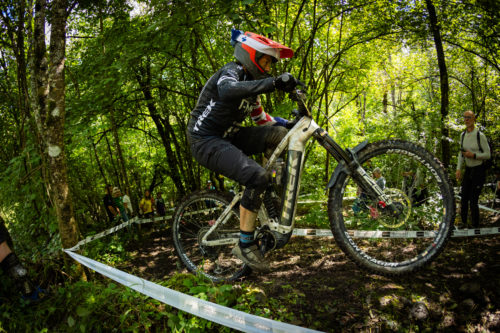
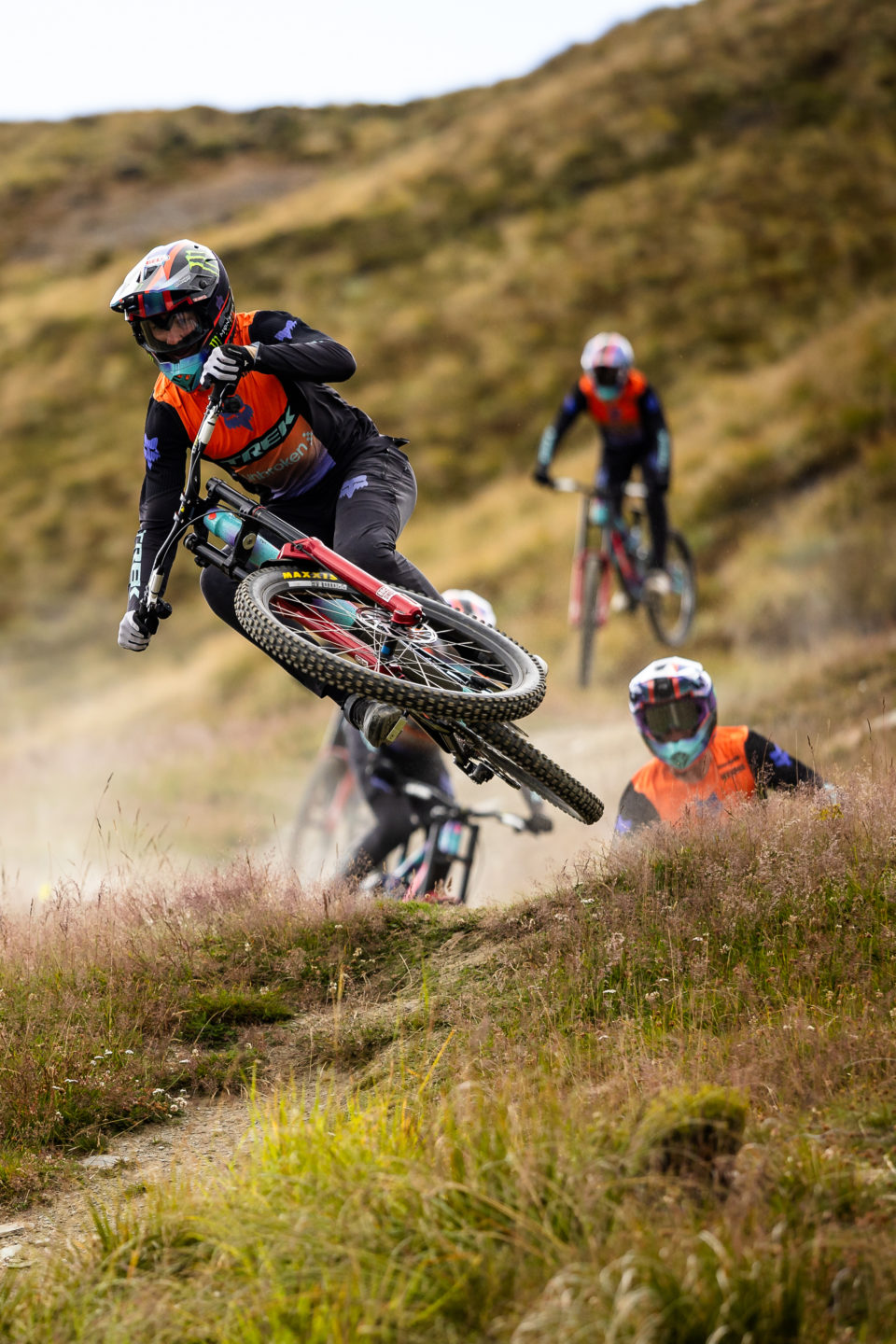
Tracy rumbling down the World Cup e-enduro course in Finale Ligure in 2024.
Moseley is still kicking ass. She’s still winning national titles (four this year, in fact), she’s still supporting Trek riders at World Cup events, and she’s still one of mountain biking’s greatest advocates, dedicating much of her time to encouraging moms and families to spend more time outdoors.
“I’ve never got huge plans,” Moseley says. “I want to be that old 78-year-old lady riding around and racing her bike. And I want to be able to help out as many other people along that journey, and help them find their thing in life that gives them a real kick and a focus and a purpose.”
Moseley spoke with the Trek Race Shop about what her Hall of Fame induction means to her, and her journey through the sport. The following conversation has been edited for length and clarity.
How did you find out you were being inducted into the Hall of Fame?
Tracy Moseley: It was a bit of a random phone call I got a few months ago. I’ve never actually even thought about it — whether I should or shouldn’t be there. It’s lovely, in many ways, to feel like my bit of history is going to be somewhere permanent.
You really had no idea they might call?
Moseley: No, not at all, not at all. And that was the thing that really stood out for me. They are very interested in this grander story of the evolution of mountain biking, and not just in its racing sense. So the things I’ve done with encouraging younger riders, trying to get more mums involved, trying to get the kids involved, and how my journey throughout my relationship with the bicycle has also evolved during the 30 years that I’ve been doing it.
I'm not great at reflecting. I'm always looking forward, at what's next.
And then obviously helping the likes of Evie and Hattie, then working with the teams as I’ve done with the World Cups over the years. There’s lots of different facets, I think, around why I tick the box.
As you lay it out, it really emphasizes that you could have been inducted for a number of reasons, so it’s cool that they’re interested in the complete picture.
Moseley: I guess you have to be a bit older as well. You got to do your time. That’s part of it. [Laughs.] It feels like they’re ending your career for you by joining, but I don’t think it’s that. It’s just stamping part of the story of the sport, which is quite cool.
What was your reaction to the news? Did you celebrate in any way?
Moseley: It was a complete complete shock, and it was really lovely to think that I had been remembered. I’m still there doing stuff, but life moves on with the sport, and certainly from a racing perspective, it’s a long while ago when I was winning World Cups and winning World Enduros.

Tracy can race it all.
As my husband would say, I’m not great at reflecting. I’m always looking forward, at what’s next, and not very good at really standing back and thinking about all the stuff that I have done.
I feel like it’s normal to have been busy and done loads of stuff. But I think when you do suddenly stop and someone says, “Look what you’ve done! You’ve done this, this, this, and this,” and even just the process of getting some pictures together and putting some text together for the presentation, it’s made me realize all the stuff I have done. Which is cool when you look back.
Obviously you’re fast on a bike, but all your mentorship work, all your attention to detail in product testing, were those things you thought you might like to do before you got stuck in?
Moseley: I always say to people that I’ve never planned out a map of my life. And I still haven’t got through what’s happening next year, to be honest, or the year after. That’s maybe good or bad, I don’t know. I have very much just evolved as opportunities have arisen.
I think that passion that I always had for racing, the dedication that I had to racing, has found a new way to show itself.
There was definitely no plan to go into the management side of things. That was very much [Trek Global Director of Sports Marketing] Tim [Vanderjeugd] coming to me saying, “Hey, I think you’d be great at this.”
Then in recent years, I’ve done a few film projects, and I’ve found myself being this voice for wanting to get kids on bikes, getting kids active and off screens, and that’s something that I never planned.
Having [my son] Toby was something we wanted to do, but you don’t even know you’re going to have kids. So to get involved in this whole new world of school, the bike bus, being a parent, realizing how important the bike has become for my “me” time as well.
Someone said you reinvented yourself really well over the years, and I think that I’m just taking the bicycle along on this life’s journey with me and finding new ways that it fits. And I think that passion that I always had for racing, the dedication that I had to racing, has found a new way to show itself, and that’s, for me, wanting to share my love for riding bikes with people that haven’t ever experienced it.
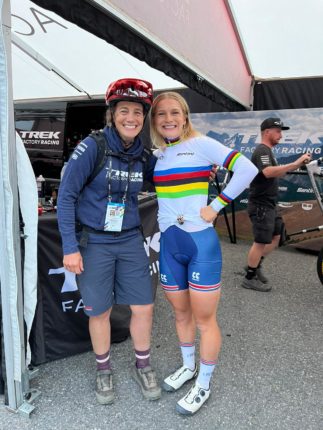
That racing edge is still there. I still love competing. I’ve enjoyed that evolution from the early days of enduro. When I was involved with the World Series, I was one of those first few racers, and that was an amazing opportunity. Then I threw myself into being involved in e-bike enduro racing, and I’ve enjoyed those elements. There’s always new stuff evolving, and I’ve loved being part of it because I just love a challenge. I love riding my bike, and I love what it’s given me in my life.
You’ve played a major role in the careers of two of mountain biking’s biggest names — Evie Richards and Hattie Harnden. What do you attribute that success to?
Moseley: The thing about those two that made it easy was they were local. I feel really fortunate that they both still come home and actually give me a call and want to go for a ride. That’s quite special that they haven’t had enough of me.
Obviously, I had experience from racing, and I helped them make sure that they kept true to themselves and their values, and not get wrapped up in the world of thinking “I’m the greatest cyclist out there.” To stay humble and grounded.
You always have equipment that you know is going to give you the best chance, and then it's up to you to do the rest.
I also tried to teach them about respecting sponsors, and how to look after people who are looking after you, and just being nice humans. For me, that’s really important grounding for anyone in any sport. Ultimately, you don’t know how long your sports career is going to be, and you want to make sure that you don’t burn bridges, and you’re a nice person at the end of it.
And obviously, having the connection with Trek made it easy for me to support them. Having that huge company, the chance to have the teams there to spot people and give them experience. Trek were open to giving them a chance.
Going back to your early days of racing, was there a result or moment that made you realize that mountain biking could be your career?
Moseley: One of the big moments for me was when I joined Trek World Racing in 2009. I’d been on a little UK Cannondale team, then with Kona, which is UK-based. Then suddenly, to go to this big American company with a factory team run by Martin Whiteley at the time, the guy who ran these real slick teams, the opportunities that we suddenly had with Trek were amazing.

Tracy and family.
Like my own mechanic, we had someone doing massage. We went to the wind tunnel, went testing. I learned so much about performance in those early years, which really helped me on that journey to try and be the best, most professional rider I could be. And just the opportunity to work with the designers, the engineers, all of that knowledge, it really did give us the best opportunity to perform.
Those three years I was on Trek World Racing for downhill were my most successful years of winning World Champs, winning the World Cup, and winning nearly all the races in 2011.
You’ve done so much for Trek. How has Trek, in turn, facilitated your evolution over the years?
Moseley: One of the huge benefits of being involved with a company like Trek is that they’ve got great bikes to do everything I wanted. Even now, when I come to a point where I’m doing gravel racing this year, and I’ve done cyclocross and a bit of dirt jumping. And then obviously when Enduro came along, they were very much at the forefront of making a great trail bike. I’ve always had bikes that have been super competitive. Which obviously, when you want to be the best you can be at a sport, it helps to have bikes that work, bikes that really are fast.
There's young girls out there who aspire to be backflipping, to be doing skate parks, and not thinking, "Well, that's not what girls do."
I’ve been fortunate that I’ve always had an amazing connection with Trek UK. To have those long-standing connections and have that respect, have that knowledge, and have that kind of friendship that you develop has hugely helped. If ever there’s a problem and I want something to get fixed, or I need to ask a question, you know who to ask.
That has also allowed me to do things like the bike bus, and get access to kids’ bikes from the Trek stores here in the UK. I’ve also been able to give to the local cycling club.
And then there’s this whole kind of evolution within the wider group that is Trek Bikes and the race team. Just having those constants has been super, super helpful. It’s not always easy, but it’s been such a solid brand. You always have equipment that you know is going to give you the best chance, and then it’s up to you to do the rest.

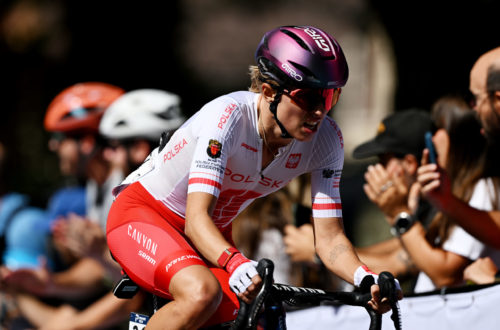
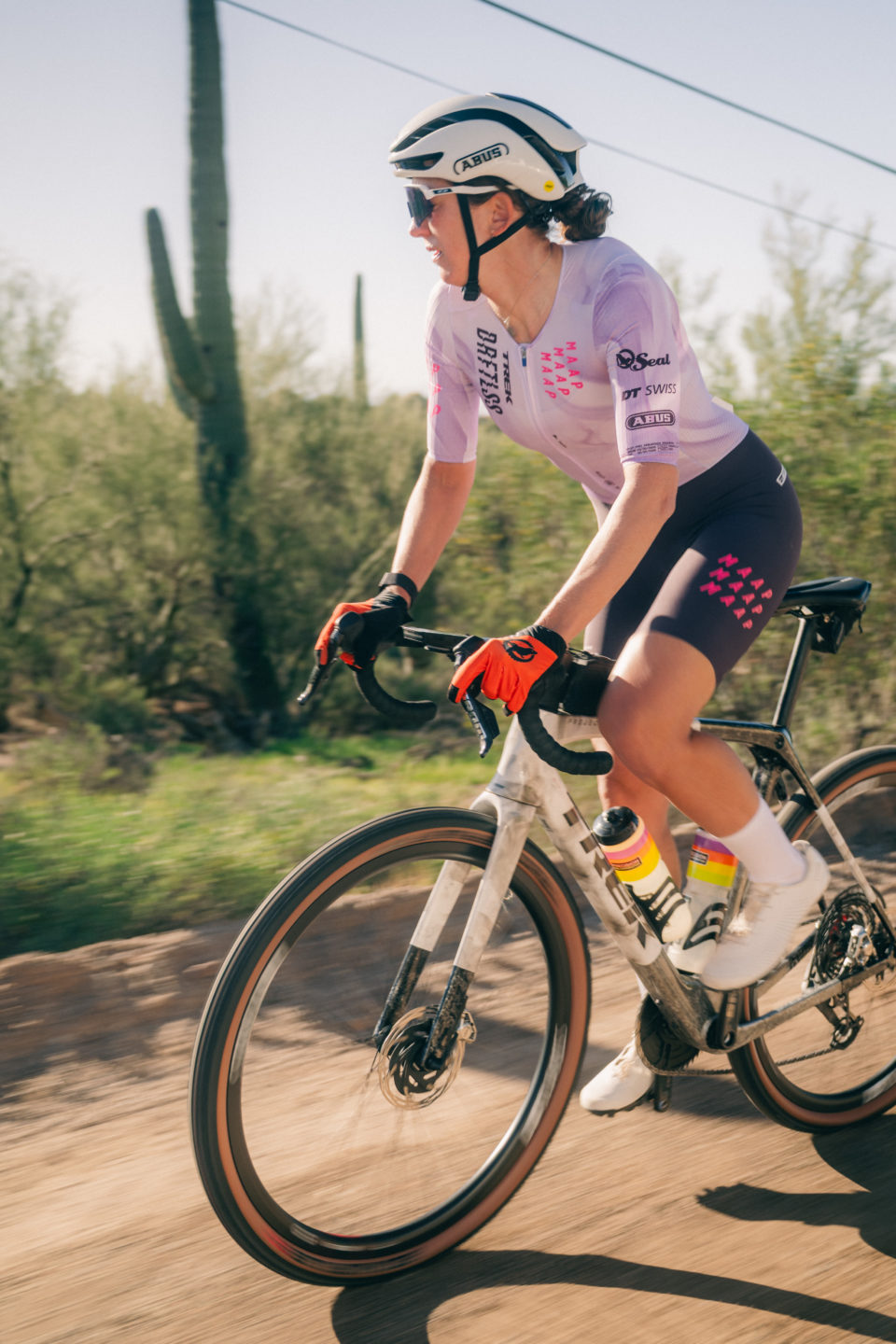
Tracy is STILL winning championships.
What’s it like looking at women’s gravity racing today? Do you see your impact on the landscape?
Moseley: I look at it now, and I’m so blown away by the level of talent. Even just working with the likes of Sacha [Earnest] and the downhill team, just that skill level that those young kids are coming onto a race team with, it’s night and day to what it was
Obviously we can’t compare eras in terms of the technology of the bikes. I even look at my son now, age eight, and the bikes he’s already had, and the trails he’s ridden, and the bike parks he’s had access to is something that I never had. When I started riding a bike at 15, we had no bike parks in the UK. There was no uplift, there were no full suspension bikes, there were no balance bikes.
What I love to see is that there’s girls doing all aspects of the sport. It’s not unusual to see girls having a go at everything and doing a really, really good job at it. There’s young girls out there who aspire to be backflipping, to be doing skate parks, and not thinking, “Well, that’s not what girls do.” They’ve now got those role models, and I guess I was one of those young ones that started that for women’s downhill in many ways. In the UK, certainly I was one of those up there with Rachel Atherton.
I really don't know what the next chapter is going to look like, but I'm definitely sure that I still have a huge passion for the sport.
We need to keep working at that because we’re now fighting with screens and all the other bombardment of life. Sadly, going outside and riding your bike at a young age is not on many people’s agendas. That’s on parents to really think about how they do that. But the door has definitely been opened for girls to do anything.
When I think of sports halls of fame — in football or baseball or whatever — I think of crusty old dudes. You’re obviously not that. What do you still want to do in this sport?
Moseley: I’ve never got huge plans. I really don’t know what the next chapter is going to look like, but I’m definitely sure that I still have a huge passion for the sport. I have a huge passion for sharing my love for cycling.
I want to be that old 78-year-old lady riding around and racing her bike. And I want to be able to help out as many other people along that journey, and help them find their thing in life that gives them a real kick and a focus and a purpose.
I’m looking forward to what that is. And if I go with what the last 30 years have been, it’s going to be a cool future.