
Casey Brown is giving young mountain bikers everything she wished she had coming up as a woman mountain biker
Casey Brown and the crew behind Dark Horse had two years to prepare for the 2025 edition of the all-women progression event. With the extra time in the oven, Dark Horse was bigger, more accessible and better than ever. Brown started Dark Horse in 2021 as the freeride event of her dreams. It has become that, and much more.
Dark Horse’s mission is simple: To surface and nurture talented young women mountain bikers who want to go pro in the sport, but don’t know what steps to take. Nine riders took part in the Dark Horse Academy program, which was introduced this year as a progression camp for girls ages 12-19 to learn from MTB pros — not just how to send it, but skills besides riding that are critical to success in the industry. Some of the sessions were practical, like nutritional guidance and concussion education, but others were about building a career, like how to collaborate with a filmer or photographer, or build a pitch deck for a brand.

Casey Brown showing off her ride to the groms.
“And the mental aspect as well,” Brown said. “Like, ‘OK, there’s a big, scary feature. Are you ready for it? What do you have in your history that relates to this feature? Can you visualize it five times in a row, doing it successfully? And do you want to follow somebody, or do you prefer to just ride it on your own and figure things out that way?’ It’s mapping out the process for everyone, too.”
The academy allowed Dark Horse to encompass a greater range of skill levels, and expand its focus beyond freeride. The end-of-week public jump jam featuring pros is still a highlight, but many of the riders who showed up to Brown’s ranch in Revelstoke, BC, were also interested in career paths like enduro racing or coaching.
“Dark Horse isn’t just about freeride,” Brown said. “It’s about discovering where you want to take it, and figuring out what’s your flavor of mountain biking.”

The Dark Horse Academy Class of '25 in session.
The goal is to keep talented women on mountain bikes. Brown cited studies that show that girls quit sports at a much higher rate than boys — twice as high, according to one study — as they enter their teenage years. One of the biggest reasons why is a lack of support structures and mentorship for young women. Dark Horse was created to fill that void in mountain biking.
“I just wanted to create something that would have helped me when I was their age or at that level in the sport,” Brown said. “I battled my way through it, and figured out how to get to be a pro eventually, but I had to take the scenic route. I had to learn everything the hard way, and there weren’t really any female mentors for me. There wasn’t the community.”
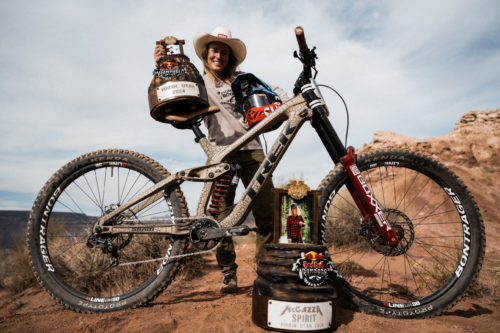
Brown saw herself in many of Dark Horse’s participants. Some of them said they wanted to ride Red Bull Rampage, “and that was just so cool, because when I was that age, that was my dream, too,” Browns said. She competed in the inaugural women’s Rampage in 2024, taking third and winning the McGazza Spirit Award as voted on by her fellow riders. Some of Dark Horse’s participants may follow in her footsteps, and if they do, they won’t be forced to wait until they’re 33 years old like Brown.

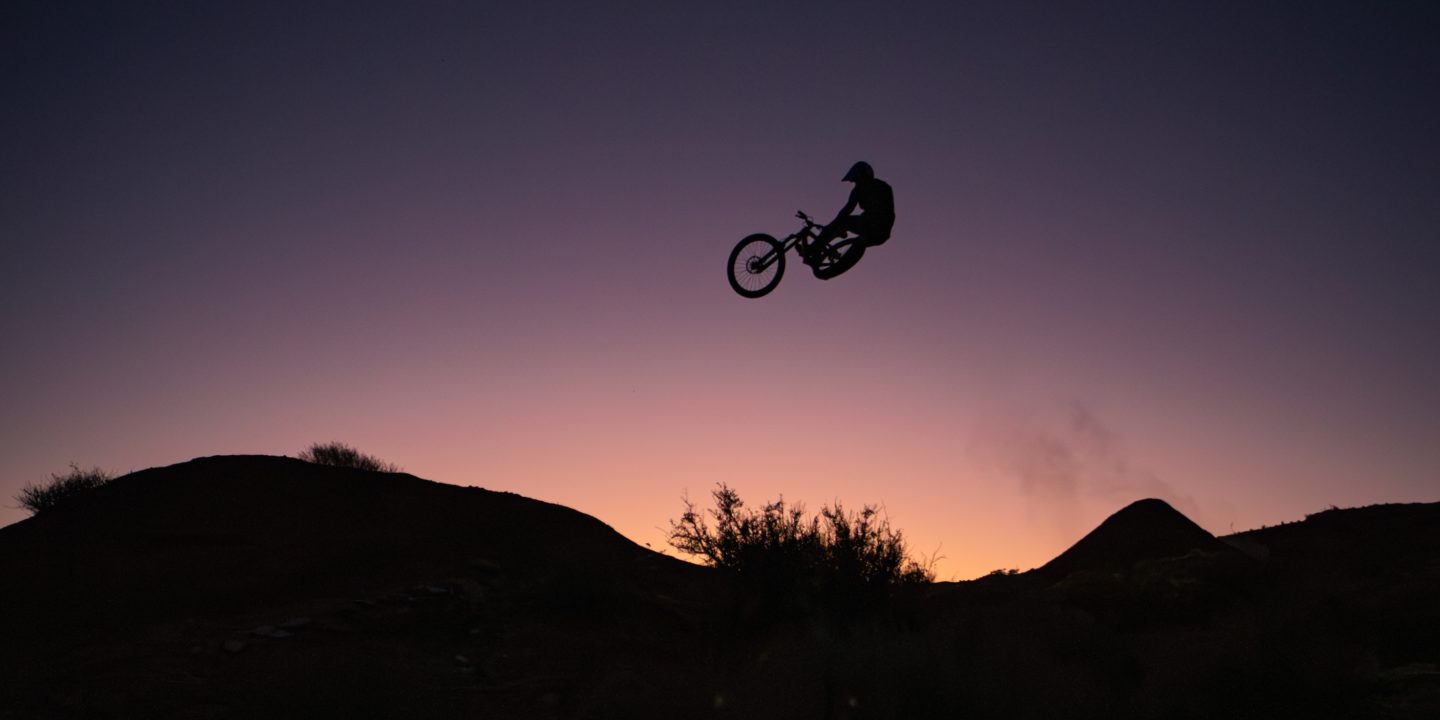
Sundown at the jump jam.
One of the ways Dark Horse is accelerating the careers of talented young riders is by giving a spot on the Natural Selection Tour to the end-of-week jump jam winner. Kiwi rider Charlie Lester-Rosson won the Dark Horse Award this year, and will be at NST Aotearoa in Queenstown next February to compete against the freeriders in the world. That sort of opportunity can be a big break.
If you need more proof of Dark Horse’s impact, just look at what some of its alumni have done in the four years since the event was founded. Lucy Van Eesteren was 15 years old when she attended the first Dark Horse in 2021. At the time, she was unsure how she could possibly make a living in the sport. But since then she has made a name for herself as one of the most exciting up-and-coming freeriders in the world. She signed a big sponsor contract at the beginning of the year.
“Dark Horse is kind of the reason I’m on the path I am right now,” Van Eesteren said in 2022. “I think for a while I thought racing was the only path you could really take if you wanted to be a pro mountain biker. But coming to Dark Horse and talking to Casey and everyone else who is doing freeride as a career, it’s super inspiring and honestly life changing.”

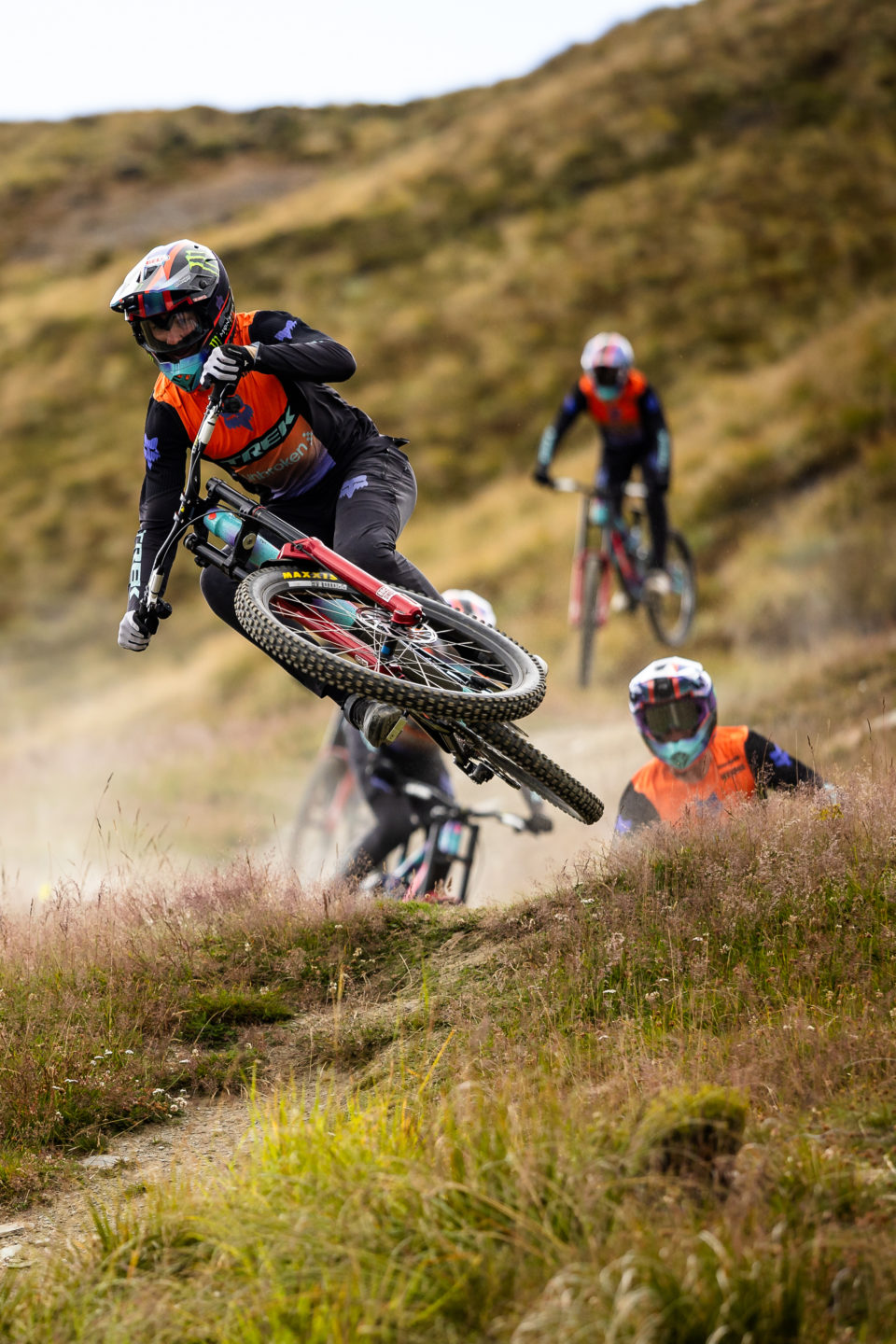
Pros and pros-to-be.
Van Eesteren returned to Dark Horse in 2025 as one of seven pro rider coaches, paying forward the guidance that she received. The Academy curriculum was based on their experiences in an industry that can be unforgiving.
Dark Horse is very much not an industry event. There are no onsite product tents or trade shows. It’s an insular event for women riders by women riders, with nothing distracting from progression and community-building at its tucked-away location. Events like Crankworx and Rampage are big and attention-getting for good reason, but their all-eyes-on-us environs can feel inhospitable to newcomers.
“I remember going to the big events — like, even a Canada Cup or something — where you see all the big tents around, and you almost feel like you have imposter syndrome, because you don’t feel like you belong there,” Brown said. “All those things can add unnecessary stress, like, ‘Oh, there’s this sponsor here. I’d love to talk to them, but I’m too scared.’ Whereas when you have a more community-driven event, it’s just a little bit more friendly.”

Bike maintenance: VERY important.
Learning from the pros is one aspect of Dark Horse; learning to lean on your peers is another. Those young attendees will likely see one another again at events going forward. And now that they’ve formed fast friendships through Dark Horse, they’ll be more apt to share resources — car pools, housing, equipment, advice, sympathy, encouragement, the list goes on — and lift each other up.
After the success of 2025 Dark Horse, it’s hard not to think about what the future might look like. Could there be more dates? More locations? Even younger riders? (“There are quite a few 10-year-olds that are absolute shredders that I know, and they gotta wait two whole years to do it. And they shouldn’t have to wait that long,” Brown said.) All possibilities down the line, but expansion will occur at its own pace, and only as long as the spirit of the Dark Horse remains intact.

The Godmother of Freeride in her element.
Dark Horse felt bigger than ever this year, and that is a credit to its people and a well-defined mission, which together created something that now feels vital to the mountain biking landscape. Young riders develop best in nurturing spaces, where they can progress on their own time, free to make mistakes and still feel supported. Dark Horse is that space for women, and there may be no stopping it now.
“It just felt like we were starting something that was way bigger than us, and that is going to grow into something that helps keep girls in sport, and help grow all sides of mountain biking for the female category,” Brown said. “I feel like if we can help keep a few girls in the sport, it’s a huge win, because that only trickles down to keeping even more girls in the sport, when you have more mentors and more heroes for the younger generation to look up to.”