
How Cécile Lejeune, Trek Driftless' newest rider, found herself in wandering
Cécile Lejeune, one of the newest riders on Trek Driftless, has always been comfortable with the unknown. She describes her initial move to the United States as an act of what the French call dépaysement, a word that has no direct English equivalent, but refers to a deliberate un-countrifying or un-mooring of oneself to feel new things, feel lost, and find yourself again.
She is ever-evolving with her circumstances. Lejeune came to the U.S. on a track-and-field scholarship to Arizona State in 2017, hoping to compete in triathlon. But she developed stress fractures due to a condition called Relative Energy Deficiency in Sport, or RED-S, as a result of an eating disorder, and was told she wouldn’t be able to run at an elite level again.
“It had been my whole identity for such a long time that it really crushed me,” Lejeune says. “I was told that my bone density was too low to support any kind of elite sport.”
I know I've only scratched the surface on the things that I need to learn and do in the sport.
Lejeune maintained her scholarship at ASU, and stayed to complete her Master’s. She joined ASU’s cycling club as a way to scratch her competitive itch and build community in a land far from her home in the Paris suburbs. The club welcomed riders of all levels, balancing fun and racing in a way she wasn’t used to as a prospective pro runner who once won French national titles in cross country and the 3,000-meter.
For once, performance and training weren’t the sole focus of her athletic endeavors. She found her mooring in the camaraderie of group rides.
“I was interacting with a lot of people that use cycling as a way to decompress or to have fun,” Lejeune says. “The value wasn’t in performance, it was in being on the bike, or time spent with friends. That really shifted my view on what was important around a sport, and it helped me approach performance in a different way, a bit further down the line, when I did want to pursue things a bit more seriously.”

Cécile Lejeune time at Arizona State taught her how to appreciate the group ride.
Lejeune completed her Master’s and then, visa-less, moved back to France during the Covid-19 pandemic. After discovering her potential on a bike at ASU, she started road racing at the Continental level. She has always been driven to compete at the highest levels she can — that neural pathway was indelibly forged during her running days — but something about tarmac never clicked with her. She wasn’t happy with her performance nor with the strict nature of the sport. So she uprooted herself again.
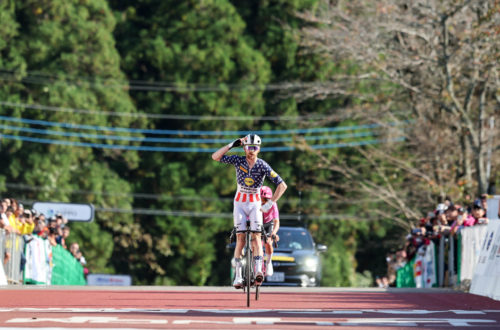
She heard about gravel racing in the U.S., and moved back to Arizona in 2024 (she also married her now-husband, who she met through the ASU cycling club — no small detail, that.) She took on three gravel races that year — including Oregon Trail Gravel, where she won three of five stages and the general classification — and was hooked.
The value wasn't in performance, it was in being on the bike, or time spent with friends. That really shifted my view on what was important around a sport.
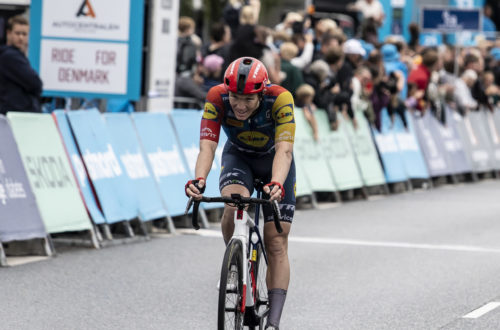
2025 was Lejeune’s first full year as a pro gravel racer, but she certainly didn’t look like a novice. She finished fifth on the final Lifetime Grand Prix standings after placing Top 10 among Grand Prix riders in five of her six series’ starts, including third (fifth-place overall) at Unbound Gravel, the sport’s crown jewel.
More importantly, she found a sport that felt like home. She liked that she could compete as an elite athlete and still be surrounded by amateurs riding simply to make their post-race coffee or beer taste much better. She liked that gravel racing is often embedded in nature, taking on the contours and conditions of its setting. And she liked that it encourages adaptability to the unpredictable, something at which Lejeune, many years into her personal dépaysement, has become very skilled.

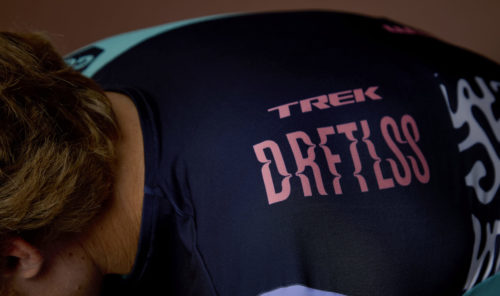
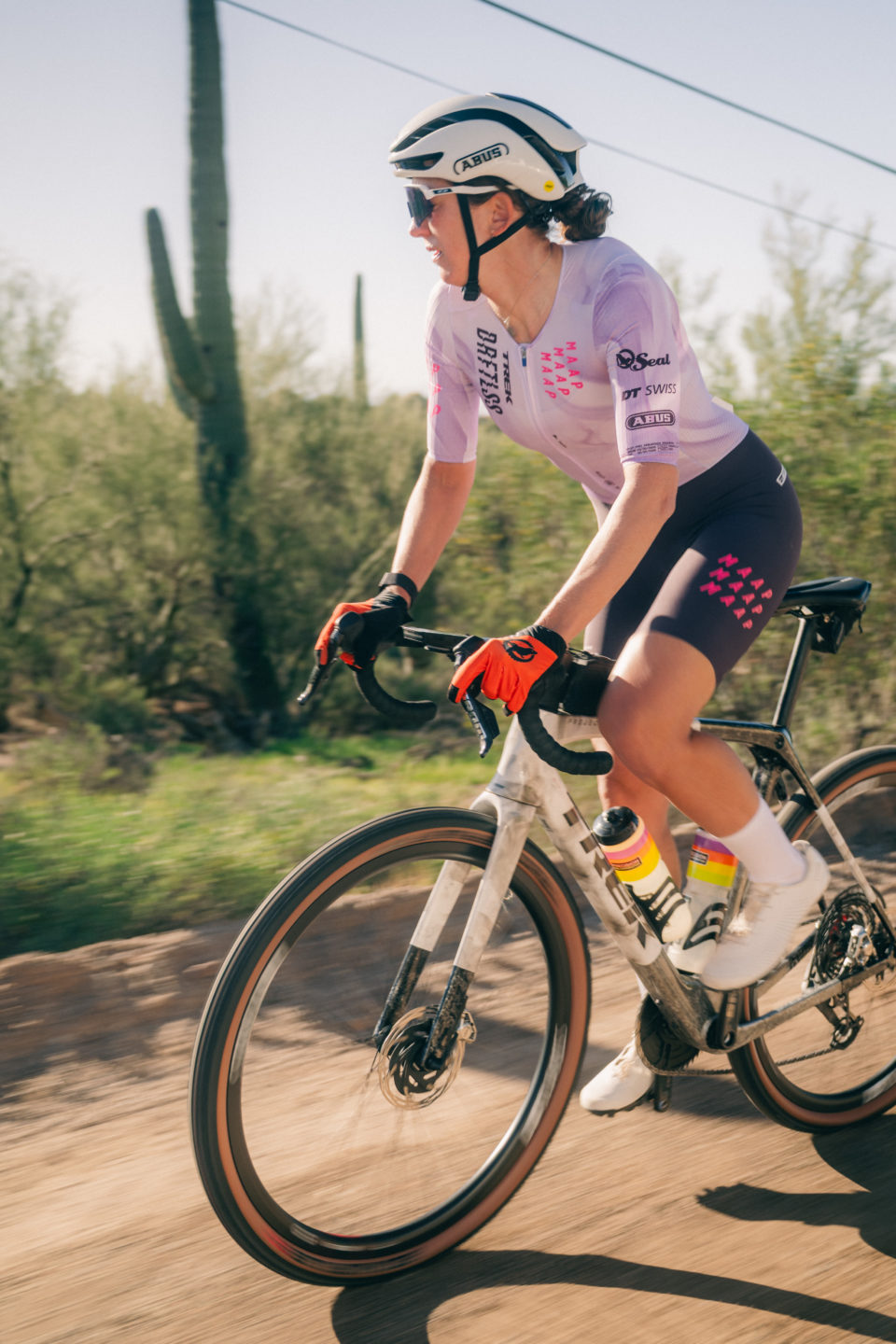
Cécile already is right at home with her new kit and bike.
“I need new things. So having the challenge of figuring out a new discipline with the technique, the equipment, the training, the nutrition, it just keeps me on my toes,” Lejeune says. “For me, it’s the best thing I can do right now. And I know I’ve only scratched the surface on the things that I need to learn and do in the sport.”
With Driftless, she’ll have support like she’s never seen. Lejeune has already been blown away by the attention she’s received just getting set up on her new bikes, before ever putting foot to pedal. And on race days, she’s looking forward to having strong teammates, particularly in the women’s field with Paige Onweller, who finished third on the 2024 Lifetime Grand Prix overall standings and will be racing her fourth season with Driftless.
That said, Lejeune may still find herself on her own at some of the less-attended races, still handling her own logistics and finding stability in a wild new environment. She’s not leaving the privateer life behind entirely, and she’s happy about that. A little unsteadiness seems to make Lejeune a lot more comfortable in life.

All-in for '26.
“I enjoy that, because it’s really learning your body and your discipline,” Lejeune says. “You’re doing your discipline 100%. You’re not delegating anything to anyone, and it makes it a very whole sport.”
Lejeune will be able to compete to the best of her ability with Driftless. More importantly she’ll be able to continue doing what she loves. Finding yourself through dépaysement may mean discovering that dépaysement is your truest way of being — a state of perpetual learning and growth. To that end, Lejeune was made for gravel, and gravel was made for Lejeune, both predicated on exploration, discovery and surprise, and neither ever sitting still.